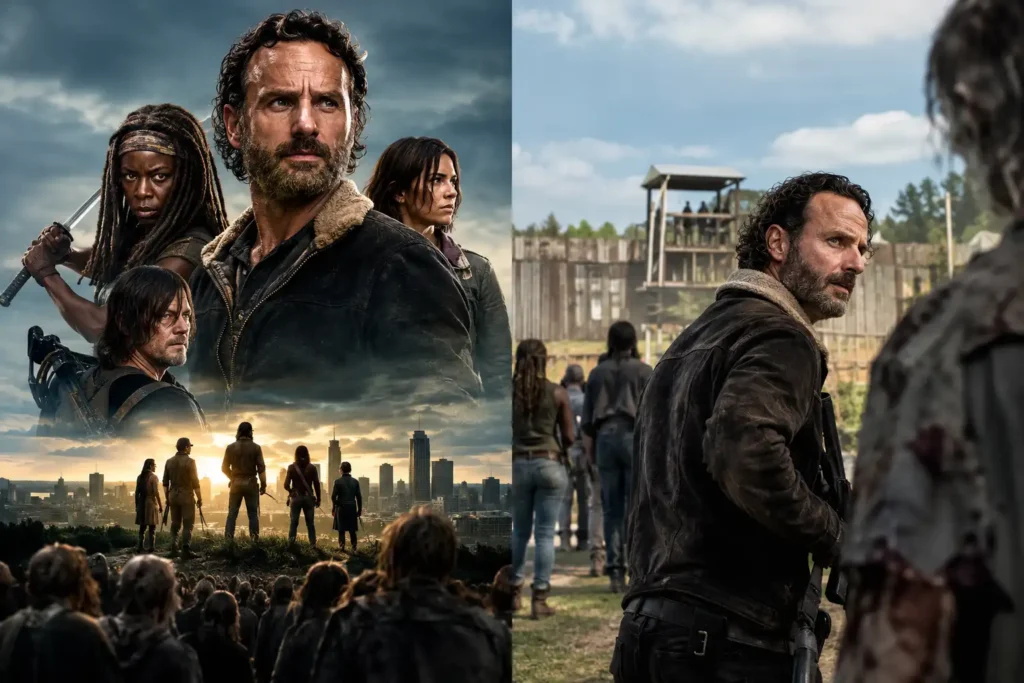
The Walking Dead is one of the most recognizable television franchises in the zombie horror genre. Known for its intense survival stories, emotional character development and unexpected plot twists, the series has attracted audiences around the world since its debut in 2010. Even after the original show ended, interest in its characters, seasons, and spin-off series continues.
Based on the comic books created by Robert Kirkman, Tony Moore and Charlie Adlard, the television drama follows people struggling to survive after a mysterious outbreak turns the dead into flesh-eating creatures called walkers. At the center of the original story is Rick Grimes, a former sheriff’s deputy who wakes up from a coma and discovers that the world he knew has disappeared.
As Rick searches for his family, he meets other survivors and gradually becomes a leader. His journey introduces viewers to memorable characters such as Daryl Dixon, Glenn Rhee, Carl Grimes, Maggie Greene, Michonne and Hershel Greene. The group faces not only dangerous walkers but also ruthless human enemies, including the Governor, Negan and Alpha.
The original series tells its story across 11 seasons, exploring everything from small survivor groups to organized communities attempting to rebuild civilization. Its universe has also expanded through several spin-offs, giving viewers more stories about familiar characters and new survivors.
This guide explores the complete story of The Walking Dead, its most important seasons, popular characters, major deaths and connected television series.
The Story and World of The Walking Dead
The Walking Dead is an American post-apocalyptic horror drama developed for television by Frank Darabont. It premiered on AMC on October 31, 2010, introducing audiences to a world where a mysterious infection has destroyed normal society.
The story begins with Rick Grimes waking up in a hospital after spending time in a coma. When he leaves the building, he discovers abandoned streets, destroyed communities and walkers roaming the area. His immediate priority is finding his wife, Lori, and son, Carl.
Rick eventually reunites with his family and joins a group of survivors. However, finding a safe place to live becomes increasingly difficult. Food, medicine, weapons and shelter are limited, while large walker herds can destroy even well-protected locations.
As the story develops, the survivors encounter different communities with their own leaders, rules and ideas about survival. Some offer cooperation and protection, while others rely on violence and control.
One of the show’s most important themes is the relationship between humanity and survival. Characters must decide whether they can maintain compassion and trust in a world where making difficult decisions often means staying alive.
ARTICAL: HPE Stock: Latest Price, Earnings, AI Growth, Forecast and Investment Outlook
How the Original Series Covers 11 Seasons
The original Walking Dead television series contains 11 seasons and 177 episodes. Its story begins with Rick’s search for his family and eventually develops into a much larger conflict involving several survivor communities.
Each season introduces new locations, enemies and challenges. Some focus on the danger of walkers, while others explore political struggles, leadership and the consequences of violence.
Season Episodes Major storyline
Season 1 6 Rick discovers the apocalypse
Season 2 13 Hershel’s farm and Shane’s conflict
Season 3 16 The prison and Woodbury
Season 4 16 The Governor and the prison’s destruction
Season 5 16 Terminus and Alexandria
Season 6 16 Alexandria and the growing Savior threat
Season 7 16 Negan takes control
Season 8 16 All Out War
Season 9 16 Rick’s departure and the Whisperers
Season 10 22 The Whisperer conflict
Season 11 24 The Commonwealth and the final story
The show’s changing settings help keep the story fresh. The early seasons concentrate on small groups of survivors, while later episodes explore how people attempt to establish new forms of society.
The Walking Dead Season 3: The Prison and the Governor
Season 3 marks an important turning point because it introduces the prison and Woodbury, two locations that shape the direction of the story.
After struggling to survive on the road, Rick’s group discovers an abandoned prison. The survivors clear out walkers and begin transforming the facility into a protected home. The prison offers a chance to establish some stability, but it also creates new challenges involving security and leadership.
Meanwhile, viewers meet the Governor, whose real name is Philip Blake. He leads Woodbury, a community that appears organized and peaceful from the outside. However, his desire for power gradually reveals a much more dangerous personality.
The Governor becomes increasingly hostile toward Rick and his group, leading to a major conflict between the two communities.
Season 3 also introduces Michonne, a skilled fighter whose intelligence and independence make her an important addition to the survivors.
The Walking Dead Season 6: Alexandria and the Arrival of a New Threat
Season 6 focuses heavily on Alexandria, a protected community that offers Rick’s group an opportunity to rebuild their lives.
However, the residents have limited experience dealing with the dangers outside their walls. Rick and the other experienced survivors must help them understand the risks of living in a world filled with walkers.
One of the season’s biggest storylines involves a massive walker herd threatening Alexandria. The survivors must work together to prevent the community from being overrun.
Season 6 also introduces the Saviors, a powerful group that controls other settlements through intimidation. Their leader, Negan, becomes an increasingly important threat.
The season’s final episode, “Last Day on Earth,” ends with a tense confrontation that sets up Negan’s devastating introduction in the following season.
The Walking Dead Season 8: The Fight Against Negan
Season 8 focuses on an all-out war, a major conflict between Rick’s alliance and Negan’s Saviors.
After suffering under Negan’s control, Rick decides to unite Alexandria, Hilltop and the Kingdom against the Saviors. The communities work together to challenge Negan’s authority and regain their independence.
The war creates serious losses on both sides and changes several important relationships. Rick’s determination to defeat Negan is also influenced by the experiences of his son, Carl.
Carl’s final storyline becomes one of the season’s most emotional developments. His desire for a more peaceful future encourages Rick to reconsider whether revenge and violence can truly create a better world.
The season eventually brings the All Out War storyline toward its conclusion and establishes a different direction for the survivors.
The Walking Dead Season 10: Alpha, Beta and the Whisperer War
Season 10 is particularly important because it develops the conflict between the survivors and the Whisperers, a dangerous group that has adapted to life among the walkers.
The Whisperers wear masks made from walker skin, allowing them to move through large herds without immediately attracting attention. Their leader, Alpha, believes that traditional civilization has become meaningless and that people should live according to the rules of the natural world.
Her philosophy directly challenges the survivors’ efforts to rebuild communities and maintain some form of normal life.
As the conflict develops, Daryl, Carol, Michonne, Negan, and other characters become involved in efforts to protect their homes. Beta also becomes a major threat after Alpha’s leadership begins to change.
Season 10 originally included 16 episodes, followed by six additional episodes released in 2021. These bonus episodes explore individual characters and provide more background on their experiences.
The extra stories include developments involving Maggie, Daryl, Carol, Gabriel, Aaron and Negan.
Season 10 is important for viewers who want to understand the Whisperers, their survival philosophy and the events that lead into the final season.
The Final Season and the Commonwealth
Season 11 brings the original series toward its conclusion through the Commonwealth storyline.
Unlike the smaller settlements seen earlier, the Commonwealth is a large organized community with a functioning economy, government and social structure. It appears to offer something close to the civilization that existed before the outbreak.
However, the community is not as perfect as it initially seems. Differences in wealth, influence and social status create tension among its residents.
The survivors must decide whether the Commonwealth represents a genuine opportunity for rebuilding society or another system built around inequality and control.
The final season also brings important character journeys closer to their conclusions while leaving opportunities for several familiar characters to appear in spin-offs.
The Most Important Characters in The Walking Dead
The characters are a major reason the franchise remains popular. Their relationships and personal struggles give the zombie apocalypse an emotional dimension that goes beyond horror and action.
Some of the most recognizable characters include:
- Rick Grimes: A former sheriff’s deputy who becomes one of the main leaders among the survivors.
- Daryl Dixon: A skilled hunter and fighter known for his independence and loyalty.
- Glenn Rhee: A resourceful survivor whose relationship with Maggie becomes an important part of the story.
- Carl Grimes: Rick’s son, whose experiences shape the show’s themes of hope and humanity.
- Michonne: A skilled warrior who becomes one of Rick’s closest allies.
- Carol Peletier: A survivor whose transformation into a strong and independent leader is one of the series’ most important character journeys.
- Maggie Greene: Hershel’s daughter, who develops into a determined leader after experiencing personal tragedy.
- Negan: The former leader of the Saviors, whose complicated personality makes him one of the franchise’s most recognizable characters.
Rick Grimes: The Main Survivor and Leader
Rick Grimes is the central character of the original series and the person who introduces viewers to the post-apocalyptic world.
Before the outbreak, Rick works as a sheriff’s deputy. After waking from a coma, he begins searching for his family and eventually becomes a leader among other survivors.
His character changes considerably throughout the series. At first, he tries to maintain the principles he followed before the apocalypse. However, repeated losses and dangerous encounters force him to make increasingly difficult decisions.
His relationships with Carl, Michonne and the other survivors influence his leadership style and his understanding of the world.
Rick’s disappearance in Season 9 is one of the biggest developments in the original show. Although many characters believe he has died, his story continues in a separate television series.
Daryl Dixon: A Survivor Who Earned the Group’s Trust
Daryl Dixon begins as an independent and sometimes difficult character, but he gradually becomes one of the most dependable members of Rick’s group.
His tracking abilities, hunting experience and skill with weapons make him valuable during dangerous situations. However, his development is not limited to physical survival.
Over time, Daryl forms strong relationships with other survivors and becomes someone they can trust during difficult decisions.
His popularity eventually leads to his own spin-off, which follows his journey beyond the United States.
Glenn Rhee: Loyalty, Courage and Love
Glenn Rhee first appears as a resourceful survivor who helps Rick navigate the dangerous streets of Atlanta.
His intelligence and ability to find supplies make him an important member of the group. He also develops a close relationship with Maggie Greene, creating one of the show’s most memorable romantic storylines.
Glenn represents optimism and compassion in a world that often encourages violence. Even when the survivors face serious threats, he tries to protect the people he loves.
His death becomes one of the most discussed moments in the franchise and has a lasting impact on Maggie’s character.
Carl Grimes: The Future Rick Wanted to Protect
Carl Grimes grows up during the zombie apocalypse, learning how to survive in circumstances that would be unimaginable for most children.
As he becomes older, Carl develops his own ideas about violence, responsibility and the possibility of rebuilding society.
His relationship with Rick is especially important because he represents the future his father wants to protect.
Carl’s belief in creating a more peaceful world influences Rick’s decisions, particularly during the conflict with Negan.
His death in Season 8 is a major turning point that changes the emotional direction of the series.
Hershel Greene: A Voice of Compassion
Hershel Greene is introduced as a farmer and doctor who provides shelter to Rick’s group.
His experience and values make him an important figure among the survivors. While many characters become increasingly aggressive, Hershel encourages people to maintain their humanity.
His relationship with Rick develops into a meaningful friendship based on respect and shared responsibility.
Hershel’s death during the prison conflict is one of the series’ most emotional moments, and his influence continues through his family.
Shane Walsh: A Friendship That Turns Into Rivalry
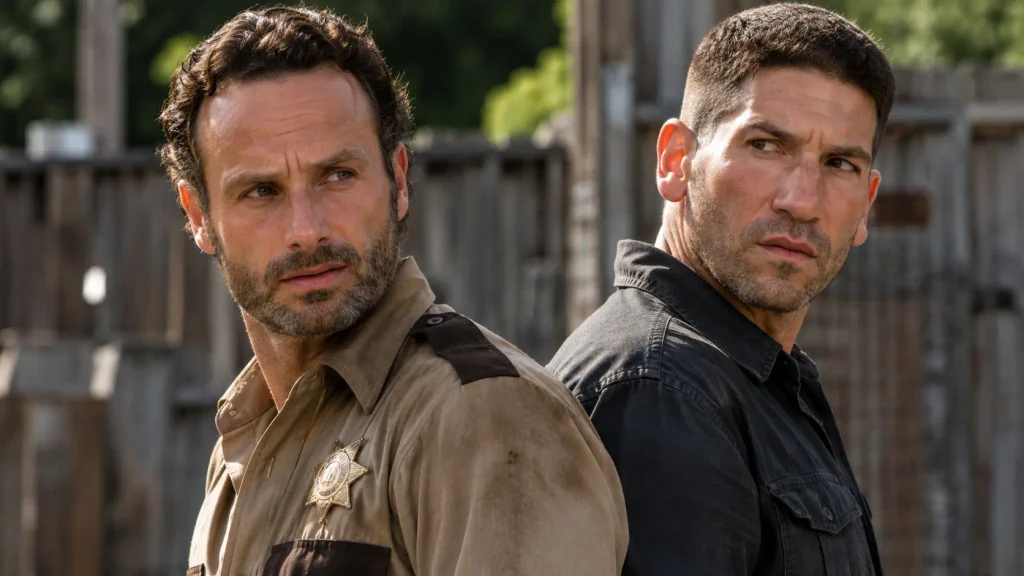
Shane Walsh is Rick’s former police partner and close friend.
During Rick’s coma, Shane believes that his friend will not survive. He becomes involved with Lori and helps care for Carl, creating serious tension when Rick returns.
As the apocalypse continues, Shane develops a more aggressive approach to survival. He increasingly believes that Rick’s decisions put the group at risk.
Their disagreement becomes a direct struggle over leadership and personal relationships.
Shane’s storyline demonstrates how fear, jealousy and the pressure of survival can change even people who were once close friends.
The Governor: A Dangerous Leader of Woodbury
The Governor, whose real name is Philip Blake, controls Woodbury and presents himself as a leader who can protect his residents.
However, his desire for control reveals a violent and manipulative personality.
His rivalry with Rick creates one of the show’s earliest major conflicts between survivor communities. His actions also demonstrate that organized settlements can be just as dangerous as the walkers outside their walls.
The Governor remains an important villain because his story explores the dangers of leadership without accountability.
Negan: From Powerful Enemy to a Complicated Character
Negan is introduced as the leader of the Saviors, a group that controls other settlements through fear.
His weapon of choice is a baseball bat called Lucille, which becomes closely associated with some of the show’s most shocking scenes.
Initially, Negan represents one of the greatest threats Rick’s group has faced. However, his character becomes more complicated as the story develops.
His later relationships with Maggie and other survivors explore whether someone responsible for terrible actions can change and whether forgiveness is ever possible.
Major Character Deaths That Changed the Story
The Walking Dead is known for unexpected character deaths, and several of these moments have become important parts of television history.
Carl Grimes: Carl dies in Season 8, Episode 9, titled “Honor.” He is bitten by a walker while helping another survivor. Before his death, he spends time with Rick and Michonne and shares his hopes for a more peaceful future.
Glenn Rhee: Glenn dies in Season 7, Episode 1, titled “The Day Will Come When You Won’t.” Negan kills him with his baseball bat, Lucille. His death becomes a major turning point for Maggie and the other survivors.
Hershel Greene: Hershel is killed by the Governor in Season 4, Episode 8, titled “Too Far Gone.” His death deeply affects Rick’s group and marks the end of an important period in the prison storyline.
Shane Walsh: Shane dies in Season 2, Episode 12, titled “Better Angels.” Rick kills him during their confrontation, and Carl later shoots Shane after he reanimates as a walker.
These events demonstrate how the series uses character losses to develop its larger themes of survival, leadership and emotional resilience.
What Happened to Rick After His Disappearance?
Rick’s disappearance in Season 9 created one of the biggest unanswered questions in the original series.
After being seriously injured while protecting his people, Rick is taken away by a helicopter connected to the Civic Republic Military. His friends and family believe that he may have died, but he actually survives.
His story continues in The Walking Dead: The Ones Who Live, a spin-off starring Andrew Lincoln and Danai Gurira.
The series follows Rick and Michonne as they face the challenges of finding each other again. It explores Rick’s experiences after his disappearance, the organization that holds power over him and the emotional cost of being separated from his family.
For viewers who want to understand Rick’s complete journey, this spin-off is an important continuation of the original story.
The Walking Dead Spin-Offs and Their Stories
The original series has expanded into a television universe featuring different characters, locations and timelines. These spin-offs provide additional information about the outbreak and explore stories that the main show could not cover in detail.
Fear the Walking Dead
Fear the Walking Dead explores the early stages of the outbreak through a different group of survivors. Its story begins before the original series has fully established its world and follows how ordinary people react when society starts collapsing.
The Walking Dead: World Beyond
World Beyond focuses on younger survivors who have grown up in the post-apocalyptic world. It also provides additional background about the Civic Republic and the organizations connected to Rick’s disappearance.
The Walking Dead: Tales of the Walking Dead
Tales of the Walking Dead is an anthology series featuring separate stories set within the same universe. Each episode introduces different characters and situations, providing new perspectives on the outbreak.
The Walking Dead: Dead City
Dead City follows Maggie and Negan as they travel through a dangerous version of Manhattan.
Their complicated history remains central to the story as they face new enemies and challenges in an unfamiliar environment.
The Walking Dead: Daryl Dixon
Daryl Dixon’s spin-off follows him after he unexpectedly finds himself in France.
The series introduces new communities, different survival challenges and more information about the wider world. Carol also becomes an important part of the continuing story.
The Walking Dead: The Ones Who Live
This series brings Rick Grimes and Michonne back into the spotlight. It explores their separation, their efforts to reunite and the powerful organization connected to Rick’s disappearance.
Together, these spin-offs make the franchise much larger than the original 11-season series.
Why The Walking Dead Continues to Attract Viewers
The lasting appeal of The Walking Dead comes from its combination of horror, action and emotional storytelling.
The walkers create constant danger, but the characters’ relationships give the series its identity. Rick’s leadership, Daryl’s loyalty, Glenn’s optimism, Maggie’s determination and Carl’s hopes for the future make the story more than a typical zombie drama.
The changing locations also help the series maintain interest. From Hershel’s farm and the prison to Alexandria and the Commonwealth, each community introduces new questions about how people should live after civilization collapses.
The spin-offs extend that experience by allowing audiences to follow characters whose stories continue beyond the original show’s ending.
For new viewers, the original series provides a complete introduction to this world. For longtime fans, the connected shows offer additional stories, character development and answers to questions left behind by earlier seasons.
Frequently Asked Questions
How many seasons are in The Walking Dead?
The original The Walking Dead television series has 11 seasons and 177 episodes. It premiered on AMC in October 2010 and concluded in November 2022. The final season contains 24 episodes, while Season 10 has 22 episodes, including six additional episodes released after its original run.
How many series are in The Walking Dead?
The television franchise has seven main series when counting the original show and six spin-offs. These include the original The Walking Dead, Fear the Walking Dead, The Walking Dead: World Beyond, Tales of the Walking Dead, Dead City, Daryl Dixon and The Ones Who Live. Each series explores different characters, locations or events connected to the same post-apocalyptic universe.
Where to watch The Walking Dead?
The Walking Dead is associated with AMC and its streaming service, AMC+. In the United States, availability may also include services such as Netflix and other digital streaming platforms, depending on licensing arrangements. Viewers outside the US should check their local streaming catalogs because the available services and episode collections vary by country.
Where to watch The Walking Dead: The Ones Who Live?
The Walking Dead: The Ones Who Live is an AMC series starring Andrew Lincoln and Danai Gurira. In the United States, viewers can check AMC+ and supported digital streaming services for availability. Amazon Prime Video and Apple TV may also offer the series through subscriptions or digital purchases, depending on the region. Availability can change over time.
Does Carl die on The Walking Dead?
Yes, Carl Grimes dies in Season 8, Episode 9, titled “Honor.” He is bitten by a walker while helping Siddiq and eventually tells his family about the injury. His final moments with Rick and Michonne are emotional and have a major impact on the direction of the story. Carl’s death also influences Rick’s desire to build a more peaceful future for the surviving communities.
Final Thoughts
The Walking Dead remains an important television franchise because it combines a dramatic survival story with memorable characters and complicated human relationships. Its 11-season journey follows the transformation of Rick Grimes and his companions as they face walkers, dangerous leaders and the challenges of rebuilding society.
From the prison conflict in Season 3 to the Whisperer War in Season 10 and the Commonwealth storyline in Season 11, the series continually changes its setting and direction. Its spin-offs also allow viewers to explore the journeys of Rick, Michonne, Daryl, Maggie and Negan beyond the original show.
Whether someone is interested in the complete season guide, the fate of Carl and Glenn, Rick’s disappearance or the connected spin-off series, The Walking Dead offers a large and interconnected story that continues to attract audiences.
SOURCE: Wikipedia