Imagine voting for your MP, your MLA, and your municipal councillor all on the same day, once every five years—and then hearing nothing about elections until the next cycle. That is the promise of One Nation One Election, one of the most debated reform ideas in Indian politics today. This is one nation, one election, explained in plain English: what the plan is, the seven biggest arguments for and against it, and where it stands right now.
India did this once: from 1951 to 1967, Lok Sabha and assembly polls were simultaneous until early dissolutions and President’s Rule scattered the calendar. Electoral histories are catalogued on Google Books.
7 Big Arguments: One Nation, One Election Explained
Pro 1. It Could Save Thousands of Crores
The 2019 Lok Sabha election alone was estimated to cost around ₹60,000 crore in public money plus party and candidate spending. Simultaneous polls would compress that into a single exercise instead of repeating it every few months somewhere in the country.
Pro 2. Governance Would Stop Freezing Every Few Months
Every election triggers the Model Code of Conduct, freezing new schemes and projects. With some state always going to polls, large parts of the country sit under the code for months each year—one synchronized cycle would free governments to govern.
Pro 3. Security Forces Get Their Day Job Back
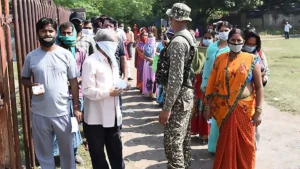
Indian elections move lakhs of security personnel and polling staff nationwide—teachers double as polling officers, and paramilitary shuttles state to state. Simultaneous polls would concentrate this mobilization into one period instead of a near-permanent deployment.
Pro 4. Voters May Actually Turn Up More
Repeated polling breeds fatigue, and turnout in state and local polls often sags. A single high-profile election day, supporters argue, would draw bigger crowds and a clearer mandate. But voting is only half of democracy—the other half is knowing who funds the campaigns, which our electoral bonds explained guide covers in detail.
Con 1. State Issues Could Drown in the National Wave
If Lok Sabha and assembly polls coincide, national narratives could overwhelm local concerns—water, roads, state schemes. Regional parties fear a presidential-style contest on someone else’s turf, weakening federalism.
Con 2. The Logistics Are Mind-Boggling
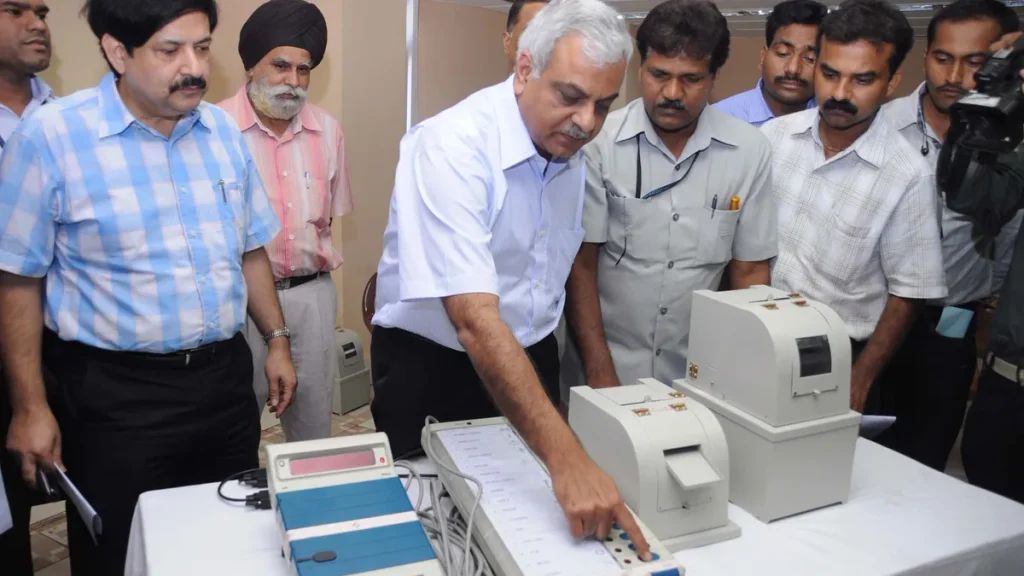
With over 950 million eligible voters, simultaneous polls would need EVMs and VVPATs on a scale never attempted, plus synchronized rolls and security for roughly a million polling stations at once—the Commission’s biggest operational worry.
Con 3. What If a Government Falls Mid-Term?
The Kovind committee’s answer: if a house falls early, fresh elections cover only the remainder of the five-year term. Critics say this creates lame-duck governments and still doesn’t fully solve the puzzle.
Where Does the Plan Stand Right Now?
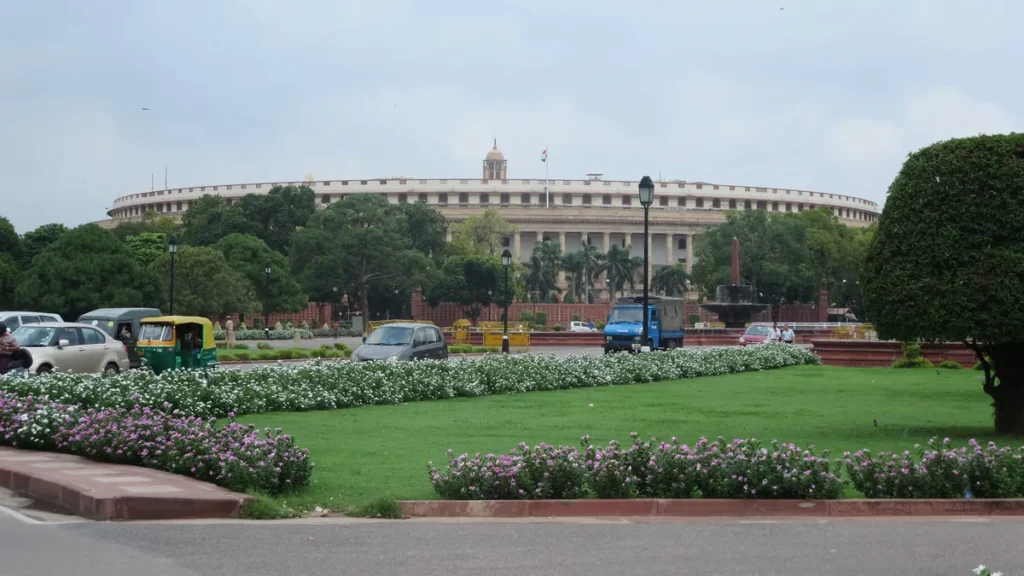
In September 2023 the government set up a high-level committee under former President Ram Nath Kovind; its March 2024 report (over 18,000 pages) recommends two stages—Lok Sabha plus all assemblies together, then local bodies within 100 days. It needs constitutional amendments (Articles 83, 172, and a new Article 82A) by special majority, plus ratification by half the states for federal provisions. In December 2024 the Constitution (129th Amendment) Bill and a companion UT bill went to a 39-member Joint Parliamentary Committee, whose work scholars track on Google Scholar. For readers following the One Nation One Election explained debate, the JPC report is the document to watch—as of October 2026, no implementation date is fixed.
Frequently Asked Questions
What exactly is One Nation One Election?
It is a proposal to hold elections to the Lok Sabha and all state legislative assemblies—and eventually local bodies—simultaneously on a single five-year cycle, instead of the current staggered calendar.
Did India ever hold simultaneous elections before?
Yes. The first four general elections (1951–52, 1957, 1962, 1967) were held alongside state assembly polls. The cycle broke in the late 1960s after premature dissolutions of the Lok Sabha and several assemblies.
What did the Kovind committee recommend?
Simultaneous Lok Sabha and assembly elections as stage one, followed by synchronized municipal and panchayat polls within 100 days as stage two, backed by constitutional amendments including a new Article 82A.
Which constitutional amendments are needed?
Changes to Articles 83 and 172 (fixing five-year terms), Articles 85 and 174 (dissolution provisions), and insertion of Article 82A—requiring a special parliamentary majority plus ratification by at least half the states.
What is the current status of the bills?
The Constitution (129th Amendment) Bill, 2024, and the Union Territories Laws (Amendment) Bill were introduced in the Lok Sabha in December 2024 and sent to a Joint Parliamentary Committee for detailed scrutiny.
When could One Nation One Election actually happen?
There is no fixed date. Even supporters concede it needs the JPC report, parliamentary passage, state ratifications, and massive EVM logistics—a multi-year exercise at best, assuming political consensus emerges.
Final Thoughts
One Nation One Election is that rare reform where both sides have a point: the savings and stability are real, and so are the federalism and logistics worries. Whether you came to this one-nation-one-election explained guide convinced or skeptical, watch the Joint Parliamentary Committee—its report will decide whether this idea stays a debating point or becomes the biggest electoral overhaul since independence.
Disclaimer: This article is for general information only and does not constitute legal advice. While we cite official sources and strive for accuracy, laws and interpretations change over time. Readers should verify with the bare Acts on India Code (indiacode.nic.in) or consult a qualified advocate for advice on specific matters. Spotted an error? Contact us—corrections are published visibly under our Corrections Policy.