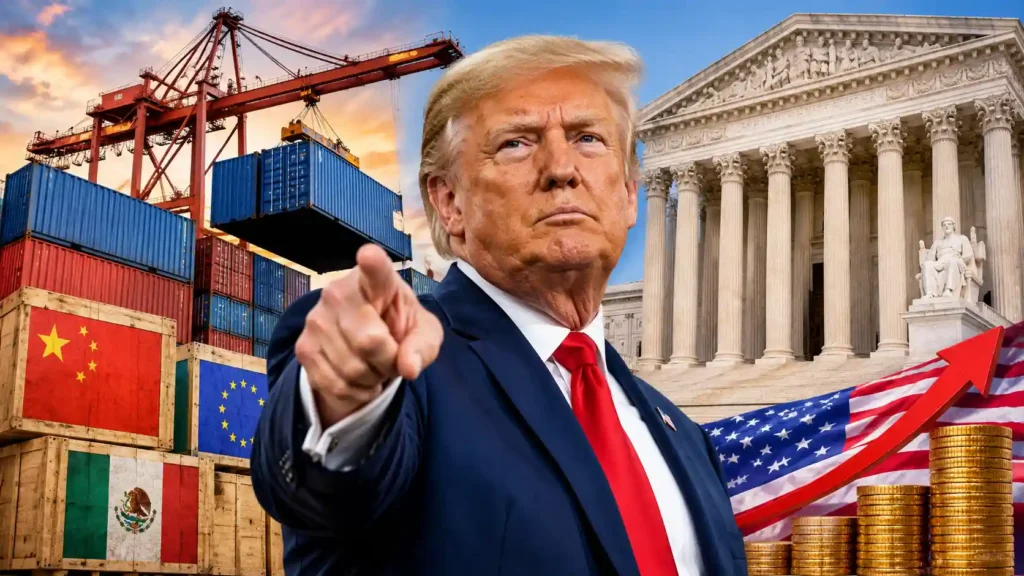
Tariffs have become a major issue in the United States, affecting international trade, consumer prices, American businesses and the country’s economic outlook. What began as a debate over import taxes has developed into a much wider discussion involving President Donald Trump’s trade policies, a landmark Supreme Court decision, billions of dollars in tariff refunds and a proposed $2,000 payment for Americans.
The issue has become especially important in 2026. The Supreme Court’s decision on emergency tariff powers changed the legal position of several import duties, while businesses began navigating a complicated refund process. Companies such as Amazon have also faced questions about whether customers should receive money back when previously collected tariffs are refunded.
Meanwhile, the proposed $2,000 tariff dividend has attracted attention from people hoping to receive financial assistance. However, a proposed payment is not the same as an approved government benefit.
Understanding tariffs requires looking at both their economic effects and the latest legal developments. This guide explains the Trump tariff policies, the Supreme Court ruling, refund eligibility, Amazon reimbursements, the proposed tariff dividend and what Americans should watch next.
Understanding the U.S. Tariff System
Tariffs are taxes imposed on imported products when they enter a country. Governments use them to influence international trade, protect domestic industries, generate revenue and respond to certain trade practices.
For example, imagine an American company imports $10,000 worth of goods that are subject to a 10% tariff. The company would generally owe $1,000 in import duties, assuming the entire shipment is covered by that rate.
The importer of record is normally responsible for paying the tariff to customs authorities. However, the economic cost can be shared among importers, foreign suppliers, retailers and consumers.
This is why changes in tariff policies can affect everyday shopping, manufacturing expenses and business investment.
ARTICAL: The Walking Dead: Complete Guide to All 11 Seasons, Characters, Deaths and Spin-Offs
Different Types of Tariffs
Not every tariff serves the same purpose. Some are designed to protect domestic industries, while others respond to specific trade practices.
- Import tariffs: Taxes charged on products entering a country.
- Ad valorem tariffs: Duties calculated as a percentage of a product’s value.
- Specific tariffs: Fixed charges based on the quantity or weight of imported goods.
- Antidumping duties: Additional duties targeting imports sold at unfairly low prices.
- Countervailing duties: Measures designed to offset certain foreign government subsidies.
Understanding these differences is important because the legal rules, tax calculations and refund procedures can vary.
How Tariffs Affect the Economy and Everyday Prices
Tariffs can influence the economy in several ways. Their effects depend on which products are targeted, how businesses respond and whether alternative suppliers are available.
Why Imported Products Can Become More Expensive
When companies pay additional import duties, they may increase wholesale or retail prices to recover some of their expenses.
Products that could be affected include electronics, clothing, furniture, automobiles, machinery and household equipment.
However, prices do not always increase by the full tariff percentage. Some businesses absorb part of the cost, while others negotiate with suppliers or change their sourcing strategies.
Impact on American Manufacturers
Domestic manufacturers can benefit when tariffs make competing imported products more expensive.
For example, an American steel producer may face less price competition from certain foreign suppliers. This can create opportunities for domestic production and investment.
However, manufacturers that use imported steel, aluminum or electronic components may experience higher production expenses.
As a result, the same tariff can benefit one business while creating financial pressure for another.
Effects on Employment and Business Investment
Tariffs can influence hiring and investment decisions. Companies may expand domestic production if trade restrictions make local manufacturing more attractive.
On the other hand, businesses facing higher material costs may delay expansion, reduce hiring or reconsider planned investments.
The long-term outcome depends on whether domestic industries can increase production efficiently without creating high costs for consumers.
Trump Tariffs: Why Did His Trade Policies Become So Important?
President Donald Trump has made tariffs a central part of his economic and trade agenda.
His administration has argued that import duties can protect American workers, encourage domestic manufacturing, reduce dependence on foreign suppliers and improve the country’s negotiating position.
The policies have also generated considerable controversy because of their potential effects on major trading partners and international supply chains.
Which Countries Are Involved in Trump’s Tariff Policies?
China has been one of the most important countries in the U.S. tariff debate. Trade disputes between the two economies involve manufacturing, technology, industrial competition and supply-chain dependence.
Canada and Mexico are also important because of their close economic relationships with the United States. Tariff developments can affect automotive production, agriculture, energy and cross-border manufacturing.
Trade negotiations with European countries have involved automobiles, industrial products and broader economic relationships.
The actual tariff rate on a particular product depends on its country of origin, classification, applicable trade measures and any available exemptions.
Why Do Supporters and Critics Disagree?
Supporters argue that tariffs can protect domestic production and encourage companies to manufacture more goods within the United States.
Critics point to several risks:
- Higher costs for imported goods and manufacturing materials.
- Retaliatory tariffs from trading partners.
- Uncertainty for businesses planning long-term investments.
- Disruptions to international supply chains.
- Potential increases in consumer prices.
The disagreement is not simply about whether tariffs work. It is also about who benefits, who pays and whether the economic advantages outweigh the costs.
Supreme Court Tariff Ruling: What Changed in February 2026?
One of the biggest developments in the U.S. tariff debate occurred on February 20, 2026, when the Supreme Court issued its decision in Learning Resources, Inc. v. Trump and the related Trump v. V.O.S. Selections, Inc. case.
The Court ruled that the International Emergency Economic Powers Act, commonly known as IEEPA, does not authorize the president to impose tariffs.
The decision challenged a major part of the administration’s emergency-based tariff policy and clarified the limits of presidential authority under that law.
Why Did the Supreme Court Reject the IEEPA Tariffs?
The legal dispute centered on whether IEEPA gave the president the authority to impose import duties during declared national emergencies.
The administration argued that the law’s authority to regulate international economic transactions supported the tariffs.
However, the Supreme Court rejected that interpretation.
The Constitution gives Congress the power to impose taxes and duties, including tariffs. The Court’s decision established that the emergency powers granted by IEEPA did not provide the president with the claimed authority to impose these duties.
Did the Ruling Cancel Every Trump Tariff?
No. The decision concerned tariffs imposed under IEEPA, not every form of import duty.
The United States has other trade laws that provide separate authority for certain tariffs.
Two important examples are:
- Section 301: Allows action against certain foreign trade practices considered unfair or harmful to U.S. commerce.
- Section 232: Allows certain import restrictions when the government determines that imports threaten national security.
Antidumping and countervailing duties also operate under separate trade laws.
Therefore, the Supreme Court ruling did not mean that all imported products would enter the United States without taxes.
What Does the Decision Mean for Trump’s Trade Strategy?
The ruling created a legal challenge for the administration because some of its earlier tariff measures could no longer rely on IEEPA.
The government could still pursue trade restrictions through other legal authorities, but those laws have their own requirements and procedures.
This has made the legal basis behind individual tariff announcements particularly important for businesses and importers.
Tariff Refunds: Why Are Billions of Dollars Being Returned?
One of the most significant consequences of the Supreme Court ruling is the effort to return eligible IEEPA duties collected from importers.
Businesses had paid substantial amounts in import taxes under the affected executive orders. Following the ruling, the government faced the challenge of determining which payments qualified for refunds.
The scale of the operation is unusually large.
According to a Federal Register notice published in October 2026, approximately $166 billion in IEEPA duties had been assessed between February 3, 2025, and February 24, 2026. More than 53 million import entry summaries were involved. <Link ref=”turn353178search6″ title=”Federal Register – IEEPA tariff refund background”/>.
How Does the CAPE Refund System Work?
U.S. Customs and Border Protection (CBP) developed the Consolidated Administration and Processing of Entries system, known as CAPE, to manage eligible refund claims.
The system is designed to simplify the submission and review of affected import entries.
Instead of processing every transaction through the traditional individual-entry approach, CAPE allows eligible importers to submit electronic declarations through the Automated Commercial Environment.
The general process involves:
- Identifying import entries affected by the invalidated duties.
- Preparing the required refund declaration.
- Submitting the information through the customs system.
- Allowing CBP to review the eligible entries.
- Processing approved refunds and applicable interest.
Not every import transaction follows the same procedure. Entry status, documentation and other customs requirements can affect eligibility.
What Is the Latest Tariff Refund Update?
The refund process has progressed significantly during 2026.
A November 20, 2026 report from Fluet Law, discussing recent government filings, stated that CAPE had sent approximately $127.7 billion to the Treasury for disbursement. The same report noted that the Court of International Trade had separately certified a class of importers affected by the challenged tariffs who had not individually filed lawsuits. <Link ref=”turn353178search10″ title=”November 20 IEEPA refund update”/>.
It is important to understand that money sent to the Treasury for disbursement is not necessarily the same as money already received by every eligible importer.
Some businesses may still need to provide banking information, resolve customs documentation issues or complete additional legal procedures.
The process is also separate from any proposed consumer payment or tariff dividend.
Who Qualifies for a Tariff Refund?
The primary beneficiaries of the court-ordered refund process are importers that paid eligible IEEPA duties.
The importer of record is generally the business legally responsible for declaring imported goods and paying the applicable customs charges.
A retailer, manufacturer or other importing business may therefore qualify if its transactions meet the relevant legal and administrative requirements.
What Information Do Importers Need?
Businesses may need to review several types of records:
- Customs entry numbers and import declarations.
- Proof of tariff payments.
- Product classifications and country of origin.
- Importer of Record information.
- Entry liquidation status.
- Required electronic banking details.
Companies should check the latest CBP guidance because the appropriate refund procedure can depend on the status of individual entries.
Will Ordinary Consumers Receive Government Tariff Refund Checks?
Not automatically.
Most consumers purchase products from retailers rather than importing them directly. The retailer or another importing business generally pays the customs duty.
As a result, an importer’s refund does not automatically create an individual government payment for every person who purchased an affected product.
Some retailers may decide to reimburse customers when a specific charge can be identified. Others may use recovered funds to lower prices or offset expenses they previously absorbed.
Amazon Tariff Refunds: Will Customers Get Their Money Back?
Amazon has attracted attention because the company has discussed how it will handle tariff refunds received through the U.S. customs process.
In an August 2026 report, Amazon CFO Brian Olsavsky said the company had received approximately $600 million in tariff refunds during the second quarter.
He also explained that Amazon was not the importer of record for most products sold through its marketplace. <Link ref=”turn353178search8″ title=”The Washington Post – Amazon tariff refunds and customer reimbursements”/>.
This distinction is important because Amazon sells products from many independent businesses, and different companies may be responsible for importing those products.
How Will Amazon Reimburse Affected Customers?
Amazon identified limited situations in which specific import charges could be traced to individual customer purchases.
In those cases, the company said it would proactively contact affected customers and automatically issue refunds.
For other transactions, Amazon indicated that recovered tariff money would be used to support lower prices and customer value.
This approach means that receiving a tariff refund does not automatically require Amazon to send money to every customer.
What Should Amazon Shoppers Do?
Customers should:
- Check their Amazon account and order history.
- Review official refund notifications.
- Confirm whether a specific import charge appeared on their purchase.
- Contact Amazon customer support if they have questions about an identifiable charge.
Customers should not trust unofficial websites promising guaranteed Amazon tariff refunds or requesting sensitive account information.
$2,000 Tariff Dividend: Is the Proposed Payment Becoming a Reality?
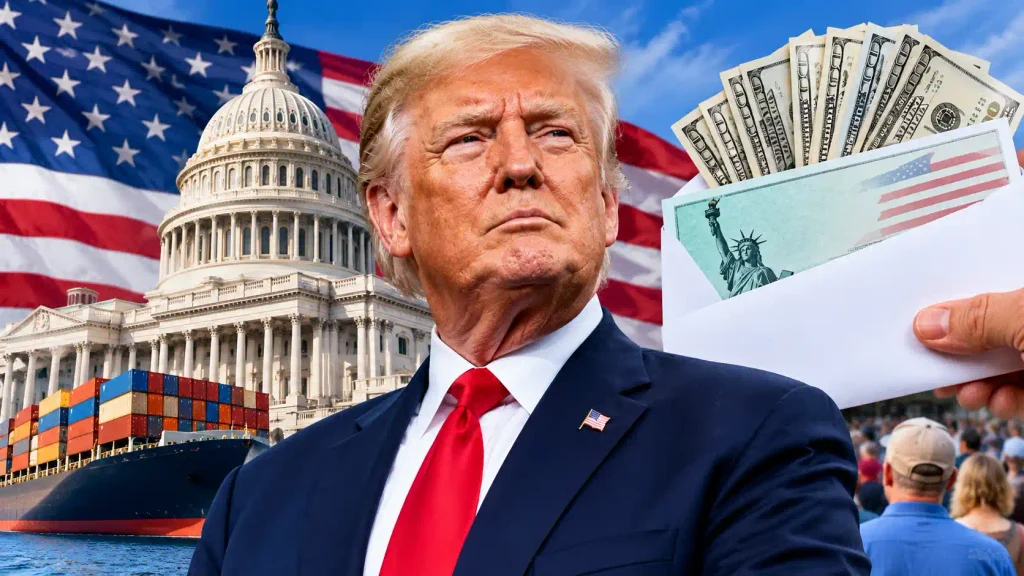
The proposed $2,000 tariff dividend is another major topic connected to Trump’s trade policies.
In November 2025, Trump discussed returning some tariff revenue to Americans through payments of at least $2,000, with higher-income individuals excluded from the proposal.
The announcement generated widespread interest because many people wanted to know whether they could receive direct financial assistance.
However, the original proposal did not establish an approved federal payment program.
What Is the American Tariff Rebate Act?
A separate legislative development emerged in September 2026.
Representative Valerie Foushee introduced H.R. 10494, the American Tariff Rebate Act, on September 17, 2026.
The introduced bill proposes:
- A $2,000 tax credit for eligible individuals.
- A $4,000 credit for eligible joint filers.
- An additional $600 for each qualifying dependent.
- Income-based reductions for higher earners.
The bill was referred to the House committees responsible for considering its provisions. It has not become law. <Link ref=”turn353178search1″ title=” Official American Tariff Rebate Act – H.R. 10494″/>.
This proposal should not be confused with an approved payment from the federal government.
When Will Americans Receive the $2,000 Tariff Dividend?
As of November 25, 2026, there is no confirmed universal payment date for the proposed $2,000 tariff dividend.
The original political proposal and the American Tariff Rebate Act are separate developments. Neither should be treated as a guaranteed payment program without the required legal approval.
If Congress passes a rebate measure and it becomes law, official guidance would need to explain eligibility, tax treatment and distribution procedures.
Is a Tariff Dividend the Same as a Tax Refund?
No. These terms describe different financial arrangements.
A tariff refund returns eligible import duties previously paid by an importer.
A tax refund generally results from the difference between taxes paid and the amount owed.
A tariff dividend or rebate would involve a proposed distribution or tax benefit connected to tariff revenue.
Understanding these differences helps prevent confusion about who may receive money and why.
Other Tariff Laws That Could Shape Future Trade Policy
The Supreme Court’s decision did not remove the government’s ability to use every other legal tool available for trade restrictions.
Two important authorities are Section 301 and Section 232.
Section 301 Tariffs
Section 301 of the Trade Act of 1974 allows the United States to respond to certain foreign government practices considered unreasonable, discriminatory or harmful to U.S. commerce.
These measures can target specific trading partners, products or trade practices.
They have become particularly relevant following the Supreme Court’s decision because the administration can pursue certain trade measures through alternative legal authorities.
Section 232 Tariffs
Section 232 of the Trade Expansion Act of 1962 concerns imports that may threaten national security.
The law has been used in connection with industries such as steel and aluminum.
Unlike IEEPA tariffs, Section 232 measures rely on a different legal framework and were not automatically invalidated by the February 2026 Supreme Court decision.
Why These Trade Laws Matter to Businesses
Companies importing products into the United States need to understand which legal authority applies to their goods.
A change affecting one tariff program does not necessarily remove duties imposed under another law.
For businesses, monitoring official trade announcements, product classifications and customs requirements is essential for calculating import costs accurately.
Latest Tariff News: Developments Americans Should Watch
The tariff debate continues to affect consumers, companies, investors and international trade relationships.
Several developments deserve particular attention.
Tariff Refunds and Customs Processing
The CAPE system remains central to the refund process.
The large number of affected import transactions means that documentation, customs entry status and payment information continue to matter.
Further updates from CBP and the Court of International Trade will help explain how the remaining claims are handled.
New Trade Restrictions and Tariff Rates
The end of the IEEPA-based tariff measures does not mean that other trade restrictions have disappeared.
Section 301, Section 232 and other existing trade laws can still influence the cost of imported products.
Businesses should examine individual announcements rather than assume that one court decision applies to every tariff.
The Future of the $2,000 Rebate Proposal
The American Tariff Rebate Act has introduced a specific legislative proposal for tariff-related tax credits.
Its progress through Congress will determine whether it develops into an actual benefit program.
Until then, payment dates and eligibility claims circulating online should be treated cautiously.
International Trade Relationships
The United States continues to have important trade relationships with China, Canada, Mexico, Europe and other economies.
Changes in trade agreements, import restrictions and negotiations can affect supply chains, manufacturing decisions and business confidence.
For investors, these developments matter because tariff costs can influence company earnings and inflation expectations.
How Tariffs Could Shape the Future of the American Economy
The future of U.S. trade policy will depend on economic conditions, court decisions, congressional action and international negotiations.
Domestic manufacturers may benefit from protection against certain imported products. However, companies relying on foreign components may continue to face additional expenses.
Consumers will be watching whether these policies lead to higher prices, lower prices through refunds or changes in the availability of products.
The refund process also demonstrates how complicated international trade policy can become when large amounts of money have already been collected under a legal authority that is later rejected.
For businesses, understanding customs regulations and refund procedures is increasingly important. For consumers, distinguishing between actual reimbursements and proposed government payments is equally essential.
Frequently Asked Questions About Tariffs
What Is a Tariff?
A tariff is a tax imposed on goods imported from another country. Governments use tariffs to protect domestic industries, generate revenue and influence international trade. The importer generally pays the duty, although some of the cost may eventually reach consumers through higher prices.
What Are Tariffs in Simple Terms?
Tariffs are additional taxes on imported products. For example, an American business buying goods from another country may have to pay an import duty before selling them in the United States. The amount depends on the product, its origin and the applicable tariff rate.
What Are These Tariffs That Trump Introduced?
These tariffs refer to import duties introduced or proposed under Trump’s trade policies. They were intended to support domestic manufacturing, influence trade negotiations and address concerns about foreign competition. Some emergency-based tariffs were later invalidated by the Supreme Court because IEEPA did not authorize the president to impose them.
How Do Tariffs Affect Consumers?
Tariffs can increase the cost of imported products when businesses pass additional import expenses to customers. Electronics, clothing, furniture, automobiles and household goods may be affected. However, the final price change depends on how much of the additional cost businesses absorb themselves.
How Do Tariffs Work?
Tariffs work by adding a tax to qualifying imported products. Customs authorities determine the applicable duty, and the importer generally pays it when goods enter the country. Businesses may absorb the expense, negotiate with suppliers or adjust their selling prices.
Final Thoughts
Tariffs have become a major part of the American economic debate because they affect much more than international trade. They influence product prices, manufacturing costs, business investment and relationships with other countries.
The February 2026 Supreme Court decision changed the legal position of IEEPA tariffs, while the CAPE refund process has helped move billions of dollars toward eligible importers. Amazon’s limited customer reimbursements and the proposed $2,000 tariff dividend have also created new questions for consumers.
The most important thing is to distinguish between confirmed legal developments, actual business refunds and proposed government payments. Following official announcements and reliable tariff news can help readers understand how these policies affect their money, businesses and the wider U.S. economy.
SOURCE: Wikipedia