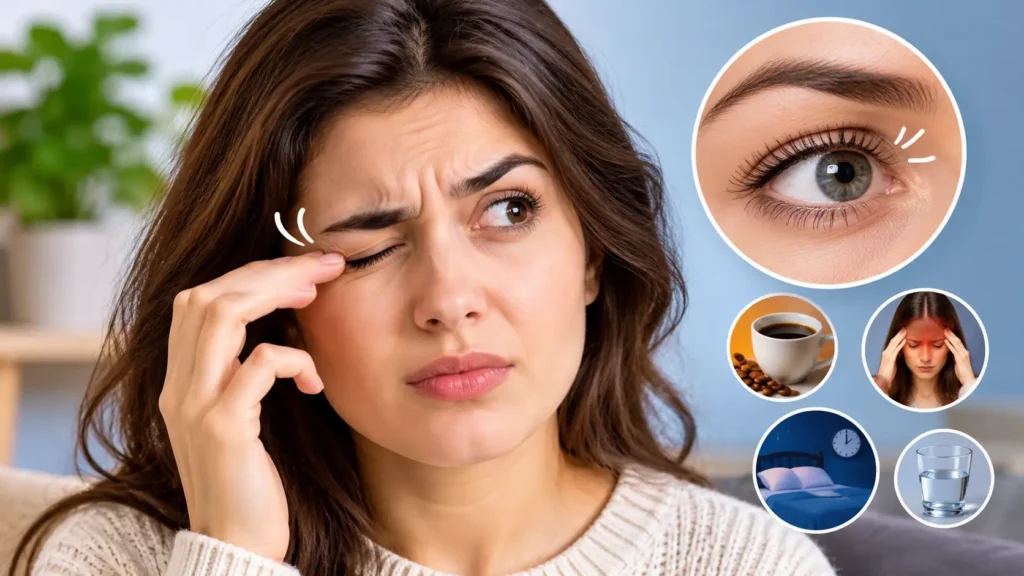
Eye twitching is a common condition that can happen unexpectedly while working, reading, driving, or relaxing. You may notice your upper or lower eyelid moving repeatedly without your control. Sometimes the movement lasts only a few seconds, while other times it returns throughout the day and becomes distracting.
Many people search for answers to questions such as why is my eye twitching, why does my eye keep twitching, and what does it mean when your eye twitches. Others want to understand whether left eye twitching or right eye twitching is connected to luck, stress, vitamin deficiencies, or an underlying health problem.
In most cases, eye twitching is harmless and disappears on its own. Common triggers include stress, insufficient sleep, excessive caffeine, dry eyes, and prolonged screen time. However, persistent eyelid spasms or movements involving other facial muscles may require medical attention.
Understanding the possible causes can help you manage symptoms and recognize when professional care is necessary. This guide covers the medical explanations, traditional interpretations, treatments, and important warning signs associated with eye twitching.
What Is Eye Twitching?
Eye twitching is an involuntary movement of the muscles around the eye, particularly the upper or lower eyelid. It happens when small muscle fibers contract without you intentionally controlling them.
The medical term for a common eyelid twitch is eyelid myokymia. It usually affects one eye at a time and produces a light fluttering, pulsing, or vibrating sensation.
Common symptoms include:
- Repeated movement of the upper or lower eyelid.
- A fluttering sensation near the corner of the eye.
- Small muscle spasms that come and go.
- Uncontrolled blinking.
- A feeling that something is moving beneath the eyelid.
Most ordinary eyelid twitches do not cause pain or affect vision. They may last for several minutes, hours, or days before disappearing.
It is important to understand that not every type of eye twitching is the same. Mild eyelid myokymia is different from conditions that cause forceful eyelid closure or spasms across one side of the face.
ARTICAL: Anthropic IPO 2026: Date, Stock Price, Valuation, Claude AI and Latest News
Why Is My Eye Twitching? Understanding the Main Causes
Eye twitching can develop for several reasons, and sometimes multiple factors contribute to the same problem. Lifestyle habits, eye irritation, and fatigue are among the most common triggers.
Stress and Anxiety
Stress is a well-known trigger of eyelid twitching. Emotional pressure, anxiety, and demanding daily routines can affect the nervous system and contribute to involuntary muscle movements.
Some people notice twitching during particularly stressful periods, such as examinations, work deadlines, or personal difficulties.
Managing stress through regular exercise, relaxation techniques, breathing exercises, and adequate rest may help reduce episodes.
Lack of Sleep and Physical Fatigue
Not getting enough sleep can make eyelid twitching more noticeable. Fatigue may also increase sensitivity to other triggers, including caffeine and stress.
People who work late, spend hours using electronic devices, or follow irregular sleep schedules may experience repeated spasms.
Maintaining a consistent sleep routine and allowing enough time for recovery can help improve symptoms.
Excessive Caffeine Consumption
Caffeine is a stimulant found in coffee, tea, energy drinks, and some soft drinks. Consuming large amounts may contribute to involuntary eyelid movements in sensitive individuals.
If you regularly experience twitching, consider whether it becomes more noticeable after drinking coffee or energy drinks.
Reducing caffeine intake and observing any changes may help identify whether it is a trigger.
Digital Eye Strain
Extended screen time can contribute to tired, dry, and irritated eyes. People often blink less frequently when concentrating on computers and smartphones, which can increase eye discomfort.
Digital eye strain may cause:
- Dryness or burning sensations.
- Blurred vision after prolonged screen use.
- Headaches.
- Tired eyes.
- Increased sensitivity to light.
Taking regular breaks, adjusting screen brightness, and blinking naturally can help reduce discomfort.
Dry Eyes and Irritation
Dry eyes develop when tear production is insufficient, or tears evaporate too quickly. This can leave the eye surface irritated and uncomfortable.
Symptoms may include redness, itching, burning, and a gritty sensation. Contact lens use, air conditioning, environmental conditions, and prolonged screen exposure can contribute to dryness.
When eye irritation is involved, lubricating drops may help improve comfort and reduce one possible trigger of eyelid twitching.
Alcohol, Nicotine, and Medication
Alcohol and nicotine may contribute to twitching in some individuals. Certain medications can also cause involuntary muscle movements as a side effect.
If symptoms begin after starting a new medication, speak with your healthcare provider. Do not stop prescribed treatment without medical guidance.
Left Eye Twitching: Medical Explanation and Cultural Meaning
Left eye twitching is one of the most frequently searched variations of this condition. Many people want to know whether a twitching left eye has a special meaning or indicates something about their future.
There are two ways to understand this question: traditional cultural interpretations and medical explanations.
What Does Left Eye Twitching Mean?
In different cultures, left eye twitching is associated with various beliefs about luck, unexpected news, financial changes, or future events.
Some traditions consider it a positive sign, while others interpret it as a warning. These meanings vary between communities and are not supported by scientific evidence.
From a medical perspective, left eye twitching usually has the same possible causes as twitching in the right eye.
These include stress, fatigue, caffeine, eye strain, and dry eyes. The side of the twitch does not automatically indicate a particular illness.
Left Eye Twitching Meaning for Females
Some traditional beliefs assign different meanings to eye twitching in women and men. In certain communities, left eye twitching in females is associated with good news or upcoming positive events.
However, interpretations differ significantly across cultures. There is no established medical evidence that left eye twitching has a special meaning for women.
Women experiencing repeated eyelid movements should consider common health-related triggers rather than relying on traditional predictions.
Upper and Lower Left Eyelid Movements
Some people notice twitching only in the upper eyelid, while others experience movement underneath the eye.
Both upper and lower eyelid movements can occur with ordinary eyelid myokymia. The lower eyelid is commonly affected, but either area can experience involuntary contractions.
Persistent movement, complete eyelid closure, or spasms spreading across the face should be evaluated by a healthcare professional.
Right Eye Twitching: Causes and Traditional Interpretations
Right eye twitching can feel similar to left eye twitching. It may involve a small flutter in the upper eyelid, lower eyelid, or corner of the eye.
Traditional interpretations sometimes connect right eye movements with good fortune, success, or unexpected changes. Other beliefs give them different meanings.
Medically, however, there is no scientific evidence that right eye twitching predicts future events.
The most common explanations include:
- Stress and anxiety.
- Poor sleep quality.
- Excessive caffeine.
- Eye fatigue.
- Dryness and irritation.
- Certain medication side effects.
If the movement is mild and occasional, it is generally not a reason for alarm. Repeated or worsening spasms deserve medical attention, particularly when other symptoms appear.
Why Do Eye Muscles Twitch? Understanding Fasciculation
Muscle twitching happens when small groups of muscle fibers contract involuntarily. These movements are commonly described as fasciculations.
Eye muscle twitching can feel like a small vibration underneath the eyelid or a repeated movement near the corner of the eye.
Several types of involuntary movements can affect this area.
Eyelid myokymia: A common, usually harmless twitch that affects one eyelid and often improves without treatment.
Muscle fasciculation: An involuntary contraction of small muscle fibers that can happen in different parts of the body.
Benign essential blepharospasm: A movement disorder that causes repeated blinking or forceful eyelid closure.
Hemifacial spasm: A condition involving involuntary contractions on one side of the face, sometimes beginning around the eye.
These conditions have different causes and treatments. An eye specialist can help identify the type of movement if symptoms are persistent or unusual.
Can Vitamin Deficiency Cause Eye Twitching?
Many people associate eyelid twitching with low magnesium, vitamin B12, potassium, or other nutritional deficiencies.
Although certain nutritional problems can contribute to muscle and nerve symptoms, an isolated eyelid twitch does not automatically indicate a deficiency.
Common triggers such as stress, fatigue, excessive caffeine, and eye irritation are more frequently responsible for ordinary eyelid twitching.
Eating a balanced diet that includes leafy vegetables, nuts, seeds, whole grains, fruits, and protein sources supports general health.
However, taking supplements without knowing whether you have a deficiency is not a proven treatment for eye twitching. If you experience additional symptoms or have concerns about your nutrition, a healthcare professional can determine whether testing is appropriate.
How to Stop Eye Twitching Naturally
Most minor eyelid spasms improve without medical treatment. However, making changes to everyday habits may help reduce the frequency of symptoms.
Improve Your Sleep Schedule
Try to sleep and wake at consistent times. Adequate rest helps reduce fatigue, which is a common trigger of eyelid movements.
Reduce Caffeine Intake
If you drink several cups of coffee or consume energy drinks regularly, consider reducing your intake. Observe whether the twitching becomes less frequent.
Manage Daily Stress
Relaxation activities such as walking, meditation, breathing exercises, and gentle physical activity may help reduce stress-related symptoms.
Take Regular Screen Breaks
Follow the 20-20-20 rule when using digital devices: every 20 minutes, look at something approximately 20 feet away for at least 20 seconds.
This can help reduce visual discomfort associated with prolonged screen use.
Apply a Warm Compress
A clean, comfortably warm cloth placed gently over closed eyelids may help relieve discomfort associated with irritation or dryness.
Avoid excessive heat and never press directly on the eyeball.
Stay Hydrated and Avoid Eye Irritation
Drink enough water throughout the day and avoid repeatedly rubbing your eyes. If you experience persistent dryness or irritation, consider seeking advice about appropriate lubricating eye drops.
Artificial Tears for Eye Twitching: When Do They Help?

Artificial tears are lubricating eye drops used to relieve dryness and irritation.
If dry eyes are contributing to eyelid twitching, these drops may improve comfort by providing additional lubrication.
Common options include:
- Standard artificial tears.
- Preservative-free lubricating drops.
- Gel-based eye lubricants.
- Lubricating ointments for longer-lasting moisture.
The best option depends on your symptoms and how frequently you need to use the product.
People who wear contact lenses should check whether their chosen drops are suitable for contact lens use.
Artificial tears do not directly treat every type of muscle spasm. If twitching continues despite relief from dryness, another trigger may be responsible.
When Should You See a Doctor About Eye Twitching?
Most ordinary eyelid twitches are harmless. However, persistent or unusual movements should not be ignored.
Arrange an appointment with an eye specialist if:
- Twitching continues for more than two weeks.
- Your eyelid closes completely during spasms.
- You have difficulty opening the affected eye.
- Twitching spreads to other facial muscles.
- Your eyelid becomes droopy.
- Your eye becomes red, swollen, or develops unusual discharge.
- The affected area feels weak or stiff.
- The movement interferes with your daily activities.
Sudden vision loss, new double vision, facial weakness, or other sudden neurological symptoms require urgent medical assessment.
These symptoms do not necessarily mean that a serious condition is present, but they need proper evaluation.
Can Persistent Eye Twitching Indicate a Medical Condition?
Although ordinary eyelid twitching is generally harmless, certain medical conditions can cause stronger or more persistent movements.
Benign Essential Blepharospasm
Blepharospasm is a neurological movement disorder involving involuntary contractions of the muscles around the eyes.
It can begin with increased blinking and gradually cause stronger spasms. In some cases, the eyelids close forcefully and interfere with reading, driving, and other activities.
Treatment may include botulinum toxin injections, which help relax the affected muscles.
Hemifacial Spasm
Hemifacial spasm causes involuntary contractions on one side of the face. The movement may initially appear around one eye and later involve the cheek or mouth.
It can sometimes be associated with pressure on the facial nerve from a nearby blood vessel.
A specialist may recommend further evaluation and treatments such as botulinum toxin injections.
Other Neurological Conditions
Certain neurological disorders can involve abnormal muscle movements, but isolated eyelid twitching is not enough to diagnose them.
Doctors consider other symptoms, medical history, and examination findings before identifying an underlying condition.
How Is Persistent Eyelid Twitching Diagnosed and Treated?
Diagnosis usually begins with a discussion about when the twitching started, how often it happens, and whether other symptoms are present.
An eye specialist may examine your eyelids, eye surface, and surrounding facial muscles. They may also ask about sleep, caffeine consumption, stress, screen habits, and medications.
Additional investigations are not necessary for every patient. They may be considered when symptoms suggest a neurological condition or another underlying problem.
Treatment depends on the cause:
- Ordinary eyelid twitching: Rest, stress management, and reducing caffeine may be sufficient.
- Dry eyes: Lubricating eye drops may help relieve irritation.
- Underlying eye conditions: Treatment focuses on the specific source of irritation or inflammation.
- Blepharospasm: Botulinum toxin injections may help control involuntary contractions.
- Hemifacial spasm: Specialist treatment may include injections or, in selected cases, surgery.
Most people with ordinary eye twitching do not need prescription medication or surgery.
Frequently Asked Questions About Eye Twitching
Why Is My Eye Twitching?
Your eye may twitch because of stress, lack of sleep, excessive caffeine, dry eyes, or prolonged screen use. These factors can contribute to involuntary contractions of the small muscles around your eyelid. Most episodes are temporary and improve when the underlying triggers are addressed.
Why Does My Eye Keep Twitching Even When I Am Relaxed?
Eye twitching can continue even when you are resting because the muscles may remain sensitive to earlier triggers such as fatigue, caffeine, or irritation. Dry eyes and irregular sleep can also contribute. If the movements continue for several weeks or become stronger, consult an eye specialist.
Why Do Eye Muscles Twitch Without Warning?
Eye muscles can twitch when small groups of muscle fibers contract involuntarily. This is commonly associated with eyelid myokymia. The movement may happen unexpectedly, even when you are not doing anything physically demanding. Stress, fatigue, and eye irritation are common triggers.
What Causes Eye Twitching More Frequently in Some People?
Some people experience repeated eyelid spasms because they have several triggers at the same time. For example, poor sleep, excessive caffeine, and long hours of screen use can contribute to recurring symptoms. Identifying personal triggers may help reduce episodes.
What Does It Mean When Your Eye Twitches According to Medical Science?
Medically, an eye twitch usually refers to an involuntary contraction of muscles around the eyelid. It is commonly harmless and does not necessarily indicate an underlying disease. Cultural interpretations about luck or future events are not scientifically established.
Final Thoughts
Eye twitching is a common condition that can occur unexpectedly and sometimes return throughout the day. Although the sensation may be uncomfortable, most cases are temporary and linked to stress, fatigue, caffeine, dry eyes, or prolonged screen use.
Whether you experience left eye twitching, right eye twitching, or repeated eyelid spasms, understanding the possible causes can help you make better decisions about your eye health.
Traditional beliefs about eye twitching may be interesting, but they should be separated from medical facts. There is no scientific evidence that these movements predict good luck, bad luck, or future events.
Getting enough sleep, reducing caffeine, managing stress, and addressing dry eyes may help improve ordinary symptoms. If twitching persists, becomes forceful, spreads to other facial muscles, or affects your vision, seek professional medical advice.
Medical Disclaimer: This article is for educational purposes only. It does not replace professional medical advice, diagnosis, or treatment.