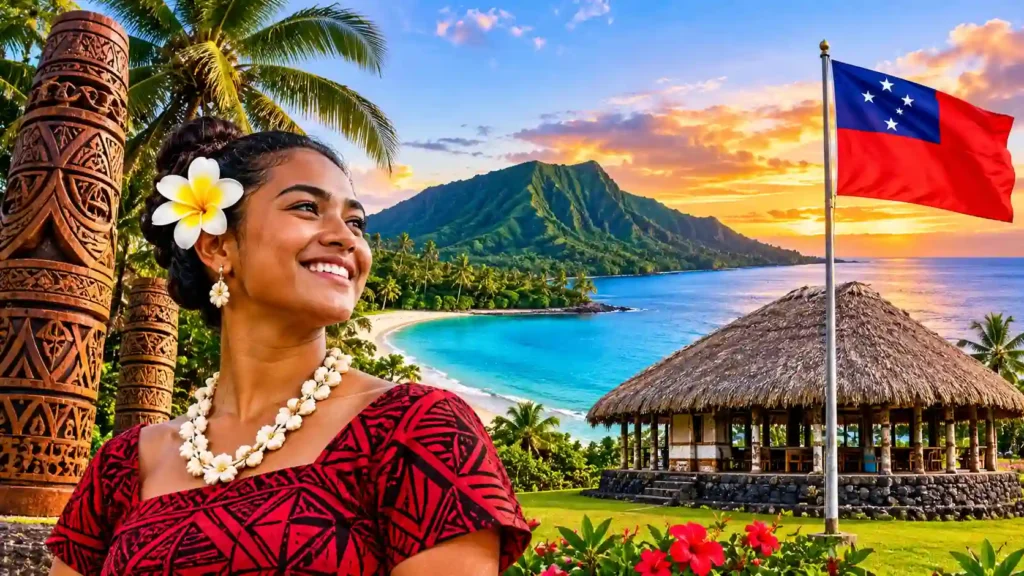
Samoa is a beautiful island country in the South Pacific Ocean, recognized for its tropical beaches, volcanic mountains, traditional Polynesian culture and unique history. Although it is relatively small in size, Samoa has a strong national identity and an important place in the Pacific region. Its natural landscapes, welcoming communities and centuries-old traditions make it an interesting subject for travelers, students and anyone researching island countries.
The country is officially known as the Independent State of Samoa. It consists of ten islands, including Upolu and Savai’i, which are its two largest islands. Its capital, Apia, is the center of government, business and everyday urban life.
One reason Samoa frequently attracts attention is its connection with American Samoa. Both share Samoan ancestry and cultural traditions, but they have different political statuses, capitals and currencies. Understanding this distinction is essential when researching the country.
From its geographical location and independence to its population, economy, famous attractions and traditional lifestyle, this guide explains everything important about Samoa.
Samoa at a Glance: Essential Country Facts
Before exploring its history and culture, here are some important facts about Samoa.
Country detail information
Official name Independent State of Samoa
Region Polynesia, Oceania
Capital Apia
Largest island Savai’i
Main populated island Upolu
Population Approximately 219,000 (2025 UN estimate)
Official languages Samoan and English
Currency Samoan Tala (WST)
Government Parliamentary democracy
Independence January 1, 1962
Time zone UTC+13
Religion Predominantly Christian
Main industries Tourism, agriculture and services
Neighboring territory American Samoa
Samoa has its own government, national institutions, currency and international relationships. It is a member of the United Nations and the Commonwealth of Nations.
ARTIUCAL: Microsoft Stock Price Today: Latest MSFT Quote, News and Market Outlook
What Makes Samoa a Unique Pacific Island Nation?
Samoa stands out because its modern national identity remains closely connected to traditional Polynesian values. The country has preserved its language, customs, family structures and community traditions while developing its economy and international relationships.
One of its most important cultural concepts is Fa’a Samoa, meaning the Samoan way of life. It emphasizes family responsibilities, respect, cooperation and community relationships.
Traditional village life continues to play an important role throughout the country. Family leaders, known as matai, help guide community affairs and represent extended families.
Samoa is also known for its natural environment. Volcanic mountains, tropical rainforests, waterfalls, coral reefs and coastal landscapes create a distinctive geographical setting.
These cultural and environmental characteristics make Samoa more than just a beach destination. It is an important example of how Pacific island communities preserve their heritage while adapting to modern life.
Geographical Location and the Pacific Island Region
Samoa is situated south of the equator in the South Pacific Ocean, within the Polynesian region of Oceania. It lies northeast of Fiji and approximately 130 kilometers west of American Samoa.
The island group is positioned roughly 2,900 kilometers from New Zealand and 4,200 kilometers from Hawaii. Its geographical position places it within an important network of Pacific island communities.
Samoa has no land borders because it is completely surrounded by the Pacific Ocean. Its coastline includes beaches, rocky formations, coral reefs and natural coastal areas.
The islands were formed through volcanic activity. Their interiors contain mountainous terrain, fertile valleys and areas of tropical rainforest.
Samoa’s geographical location also has an unusual relationship with international timekeeping. In December 2011, the country moved across the International Date Line, skipping December 30 to align its calendar with major trading partners, including Australia and New Zealand.
This decision changed its position on the global calendar and remains one of the more interesting facts about the country.
Samoa vs American Samoa: Two Places With Different Political Status
Samoa and American Samoa are closely related culturally, but they are not the same country.
Their political separation dates back to the late nineteenth century, when international agreements divided the Samoan archipelago between foreign powers.
Independent Samoa became a sovereign nation in 1962. American Samoa remained under United States administration and is now an unincorporated U.S. territory.
The differences can be understood through their governments, currencies and geographical areas.
CategoryIndependent SamoaAmerican Samoa
Political status Sovereign nation U.S. territory
Capital Apia Pago Pago
Currency Samoan Tala U.S. Dollar
Main islands Upolu and Savai’i Tutuila and Manu’a
Government National parliamentary government Territorial government
International status Independent state Part of the U.S. territorial system
Both territories have strong connections through family relationships, traditional ceremonies, language and Polynesian heritage.
However, their political arrangements are different. Independent Samoa makes its own national decisions, while American Samoa operates under the territorial framework of the United States.
This distinction is particularly useful for readers searching for information about Samoa’s location, government or relationship with the United States.
Apia: The Capital and Main Commercial Center
Apia is the capital of independent Samoa and its most important urban center. It is located on the northern coast of Upolu, the country’s second-largest island.
The city serves as the center of national administration, business, education and transportation. It is home to government buildings, markets, schools, commercial areas and important public institutions.
Apia also plays an important role in tourism. Visitors often use the city as a starting point for exploring Upolu’s beaches, waterfalls and cultural attractions.
Unlike some large international cities, Apia maintains a relatively relaxed atmosphere. Traditional village life, local businesses and modern facilities exist alongside one another.
The city is also important for Samoa’s international connections, with its port supporting trade and transportation.
American Samoa has a different capital, Pago Pago, which is located on Tutuila Island. This is an important distinction when discussing the two Samoan territories.
Islands and Natural Geography of Samoa
Samoa consists of ten islands, four of which are inhabited: Upolu, Savai’i, Manono and Apolima.
Its two largest islands account for almost all of the country’s land area and contain most of its population.
Upolu
Upolu is home to Apia and serves as the country’s main population and commercial center. It features coastal villages, tropical forests, waterfalls and popular swimming areas.
Faleolo International Airport is also located on Upolu, making the island the main arrival point for many international visitors.
Savai’i
Savai’i is the largest island in Samoa. It is known for its volcanic landscape, traditional villages, rainforests and dramatic natural attractions.
Mount Silisili, the country’s highest peak, is located on this island. Its lava fields and volcanic formations provide evidence of the region’s geological history.
Manono
Manono is a small inhabited island located between Upolu and Savai’i. It is known for its quieter environment and traditional village communities.
Apolima
Apolima is a small volcanic island situated in the Apolima Strait. Its geography and relatively small population make it different from Samoa’s two major islands.
Together, these islands create a landscape that includes fertile agricultural areas, mountainous interiors and extensive coastlines.
Population, Communities and Samoan Lifestyle
The United Nations estimated Samoa’s population at approximately 219,000 in 2025. The country’s 2021 national census recorded 205,557 residents.
Most people live on Upolu, particularly around Apia and surrounding communities. Savai’i is home to the second-largest population.
Samoan society is strongly influenced by extended family relationships. Family members often maintain close connections across different villages and countries.
A large Samoan diaspora also lives overseas, especially in New Zealand, Australia and the United States. These communities contribute to family life and the national economy through cultural connections and remittances.
Village communities remain important throughout Samoa. Traditional leaders, churches and family structures influence social activities and community decisions.
This combination of traditional values and modern development gives the country a distinctive social identity.
Samoan History: From Polynesian Settlement to Independence
Samoa has a long history that began thousands of years before the arrival of European explorers.
Archaeological evidence connects the islands to early Polynesian settlement and the wider movement of people throughout the Pacific. Over generations, Samoan communities developed their own languages, traditions, social systems and political structures.
European contact increased during the eighteenth and nineteenth centuries. Foreign traders, missionaries and colonial powers gradually became more involved in the region.
In 1899, an international agreement divided the Samoan island group. Germany gained control of the western islands, while the United States took control of the eastern islands that became American Samoa.
New Zealand occupied German Samoa in 1914 during the First World War. The territory subsequently came under New Zealand administration.
The independence movement developed over time, with local leaders seeking greater political control and national self-determination.
On January 1, 1962, Western Samoa became an independent state. It was the first Pacific island country to achieve independence in the postwar era.
The country officially changed its name from Western Samoa to Samoa in 1997.
Today, its history remains an important part of national identity and its relationships with other Pacific nations.
Fa’a Samoa: Culture, Family and Traditional Values
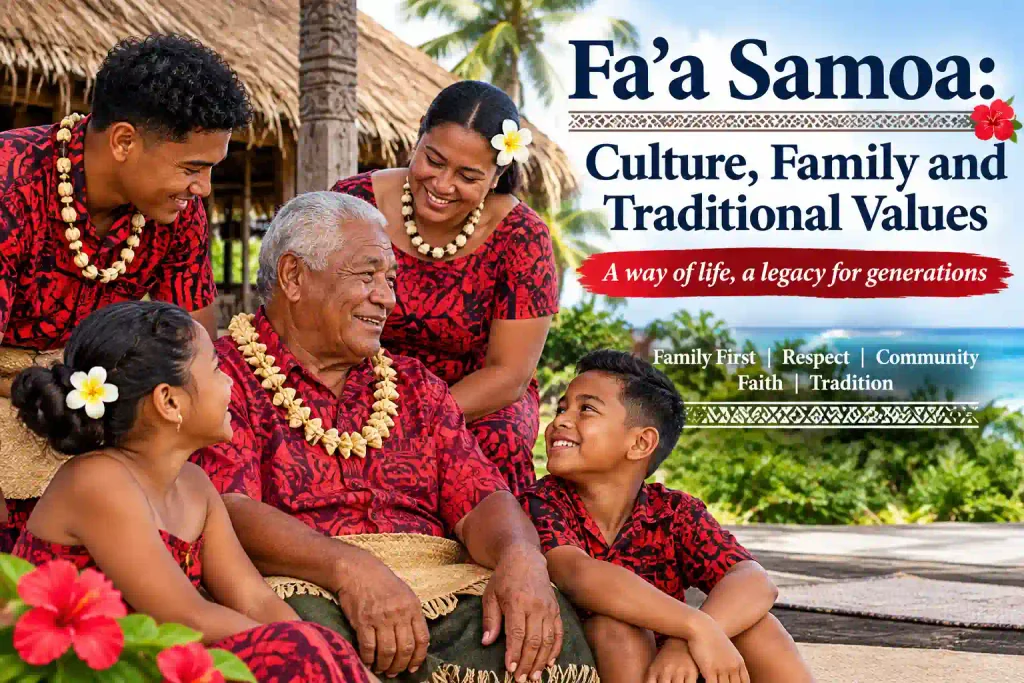
Fa’a Samoa is one of the most important elements of Samoan identity. The phrase refers to the traditional Samoan way of life and the values that guide family and community relationships.
Its central principles include respect, cooperation, hospitality and responsibility toward relatives and the wider community.
The aiga, or extended family, is a central part of this social structure. Family relationships often influence community responsibilities, cultural ceremonies and everyday decisions.
The matai system also plays an important role. Matai are traditional chiefs who hold family titles and represent their families in village matters.
Samoan culture is expressed through traditional dancing, music, storytelling, clothing and celebrations. These customs help preserve the country’s history and cultural identity.
Traditional tattooing, known as tatau, is another significant cultural practice. It has deep historical meaning and is associated with identity, commitment and social responsibility.
Christianity also has a major influence on daily life, with churches serving as important community institutions.
Languages, Religion and National Identity
Samoan and English are the official languages of Samoa.
Samoan is widely used in households, villages, cultural ceremonies and everyday communication. It is a Polynesian language with connections to other languages spoken across the Pacific.
English is used in education, government, business and communication with international visitors.
Christianity is the predominant religion in the country. Religious communities play important roles in family activities, social gatherings and village life.
Language and religion are both closely connected to Samoa’s cultural heritage. They help preserve traditional values while allowing the country to participate in international affairs.
Samoa’s Currency, Economy and Main Industries
The official currency of Samoa is the Samoan Tala, identified by the international currency code WST.
It is used for everyday purchases, accommodation, transportation, food and business transactions. Visitors should check current exchange rates before traveling.
Samoa’s economy depends on several major industries, including tourism, agriculture, fishing and services.
Agriculture supports many rural communities. Important products include coconuts, taro, bananas and other tropical crops.
Tourism contributes significantly to economic activity by supporting hotels, restaurants, transportation companies and local businesses.
Remittances are another important source of household income. Samoans living overseas regularly send money to family members in their home country.
According to the Australian Government’s country brief, tourism contributed around 20% of GDP in 2024, while remittances accounted for approximately 24%.
Despite these opportunities, Samoa faces challenges associated with its small market, geographical isolation, transportation expenses and exposure to natural disasters.
Weather, Climate and the Best Time to Visit
Samoa has a tropical climate with warm temperatures throughout the year. Its weather is influenced by ocean conditions, seasonal rainfall and trade winds.
The country generally experiences two main seasons.
Dry season: May to October is usually cooler and less rainy. These months are often preferred by visitors planning outdoor activities, beach trips and island exploration.
Wet season: November to April is generally warmer and more humid, with higher rainfall and a greater possibility of tropical storms.
Temperatures remain relatively warm throughout the year, so visitors can enjoy the islands in different seasons.
However, weather conditions can change, particularly during the wet season. Travelers should check official forecasts and local travel guidance before visiting remote beaches or mountainous areas.
Famous Places and Attractions Worth Exploring
Samoa has a variety of natural and cultural attractions. Its volcanic geography, tropical environment and traditional communities create opportunities for different travel experiences.
To Sua Ocean Trench
To Sua Ocean Trench is one of Samoa’s most recognizable natural attractions. Located in the village of Lotofaga on Upolu, it is a large swimming hole surrounded by tropical vegetation.
The formation is approximately 30 meters deep and is accessible by a long ladder leading down to a swimming platform.
It is popular with visitors because of its unusual geological structure and beautiful surroundings.
Lalomanu Beach
Lalomanu Beach is known for its clear ocean water, white sand and tropical scenery. It is a popular location for swimming, relaxation and coastal photography.
The area also offers opportunities to experience local hospitality and traditional beach accommodation.
Alofaaga Blowholes
The Alofaaga Blowholes are located on Savai’i. Ocean waves push water through openings in volcanic rock, creating impressive water displays.
The attraction demonstrates the influence of volcanic activity and ocean erosion on Samoa’s landscape.
Saleaula Lava Fields
The Saleaula Lava Fields provide a connection to Samoa’s volcanic history. They were shaped by the eruption of Mount Matavanu, which began in 1905.
The hardened lava formations and remains of structures offer an interesting look at how volcanic activity has changed the island.
Papase’ea Sliding Rocks
Papase’ea Sliding Rocks are natural rock formations on Upolu. Small waterfalls flow over smooth surfaces, creating natural slides and pools.
Visitors should follow local safety instructions and pay attention to water conditions before using the site.
Samoa’s Role in Pacific Politics and Climate Change
Samoa is an important participant in regional Pacific cooperation. Its independence, diplomatic relationships and cultural influence give it a significant position among Polynesian nations.
An important recent international event was the Commonwealth Heads of Government Meeting held in Apia in October 2024. The meeting brought international leaders to Samoa and increased attention on Pacific issues.
Climate change is another major concern for the country.
As a low-lying island nation with extensive coastal communities, Samoa faces risks associated with rising sea levels, coastal erosion, changing weather patterns and tropical cyclones.
These environmental challenges can affect homes, roads, agriculture, fisheries and tourism.
The country therefore participates in international discussions about climate resilience, sustainable development and environmental protection.
Its experience also highlights the challenges faced by other small island developing states throughout the Pacific.
Interesting Facts About Samoa
Samoa has several distinctive features that make it interesting from geographical, historical and cultural perspectives.
- Samoa became independent on January 1, 1962.
- Apia is the capital and largest urban center of independent Samoa.
- Savai’i is the country’s largest island.
- Samoa has ten islands, including four inhabited islands.
- Samoan and English are the official languages.
- The Samoan Tala is the national currency.
- Fa’a Samoa is the traditional Samoan way of life.
- Mount Silisili is the highest peak in Samoa.
- The country moved across the International Date Line in 2011.
- American Samoa is a separate U.S. territory with its own capital, Pago Pago.
These facts demonstrate how Samoa combines a distinctive geographical location with a strong cultural and historical identity.
Final Thoughts
Samoa is one of the most distinctive island countries in the South Pacific. Its volcanic islands, tropical landscapes, traditional communities and history of independence make it an important part of Polynesian heritage.
From the capital city of Apia to the natural attractions of Savai’i and Upolu, the country offers a combination of culture, geography and tourism opportunities.
Its relationship with American Samoa is also important to understand. Although both share cultural roots, independent Samoa and American Samoa have different political arrangements, currencies and capitals.
Whether you are researching the country for educational purposes, exploring Pacific geography or considering a future trip, Samoa provides a fascinating look at island life and the traditions that continue to shape the modern Pacific.
Frequently Asked Questions About Samoa
1. What is the difference between Samoa and American Samoa?
Samoa is an independent country, while American Samoa is an unincorporated territory of the United States. Both share Polynesian ancestry and Samoan cultural traditions, but they have separate political systems, currencies and capitals.
2. Where exactly is Samoa situated in the Pacific?
Samoa is located in the Polynesian region of the South Pacific Ocean, south of the equator. It lies northeast of Fiji and west of American Samoa, approximately 2,900 kilometers from New Zealand.
3. Is Samoa considered part of Polynesia or Oceania?
Samoa belongs to both geographical classifications. It is a country in Oceania and is specifically located within the Polynesian region of the Pacific.
4. How far apart are Samoa and American Samoa?
The two island groups are approximately 130 kilometers apart. They are close geographical neighbors, which helps explain their shared language, ancestry and cultural traditions.
5. Does Samoa follow the same time as the United States?
No. Independent Samoa uses UTC+13, while American Samoa uses UTC-11. This creates a 24-hour difference between their standard time zones, even though the local clock times can appear similar.
6. Why did Samoa skip a day in 2011?
Samoa moved across the International Date Line on December 29, 2011, and went directly to December 31. The change was intended to bring its working week and calendar closer to those of important trading partners such as Australia and New Zealand.
7. What are the main things produced in Samoa?
Samoa produces agricultural products such as coconuts, taro and bananas. Fishing, tourism and service industries also contribute to the country’s economy.
8. Is Samoan culture still practiced today?
Yes. Traditional customs remain important in modern Samoan society. Fa’a Samoa, family relationships, village leadership, traditional ceremonies and the Samoan language continue to influence everyday life.
9. Which island is better for exploring traditional Samoan life?
Savai’i is particularly known for its traditional village atmosphere, natural landscapes and less-developed tourism areas. Upolu also offers cultural experiences alongside the capital, Apia, and many popular attractions.
10. What should travelers know before visiting Samoa?
Visitors should understand local customs, respect village traditions, check weather conditions and review current entry requirements. Sunday is generally a day of rest, so some businesses and activities may operate on reduced schedules.
SOURCE: Wikipedia