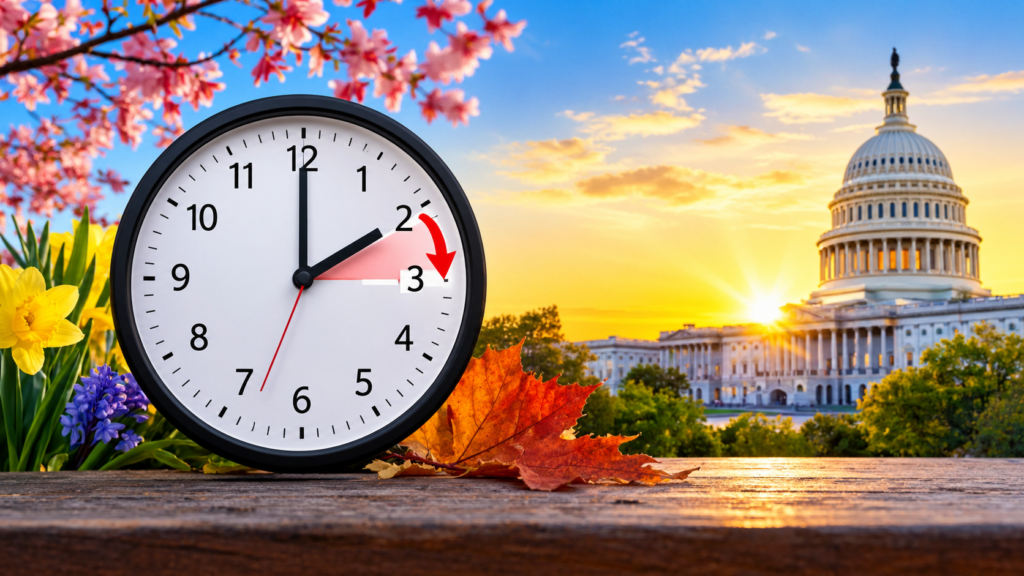
Daylight savings 2026 is becoming a popular search as Americans get closer to the next clock change. In most of the United States, Daylight Saving Time will end on Sunday, November 1, 2026.
People who observe daylight saving time will move their clocks back one hour. This change is often called “fall back” and gives many people an extra hour overnight.
The fall change is also bringing fresh attention to the debate over permanent daylight saving time and whether the U.S. should continue changing clocks twice a year.
When Is Daylight Savings in 2026?
If you are asking when is daylight savings, the next U.S. clock change is November 1, 2026.
The official term is daylight saving time, although “daylight savings time” is widely used in everyday searches.
In 2026, daylight savings time 2026 follows the usual federal schedule:
- DST started: March 8, 2026
- DST ends: November 1, 2026
- Next spring change: March 14, 2027
So, when is daylight saving time? The fall change is November 1, while the spring change already happened in March.
When Does Daylight Savings Time End?
When does daylight savings time end? It ends on Sunday, November 1, 2026, for most areas that follow the federal schedule.
At 2 a.m. local daylight time, clocks move back to 1 a.m. standard time. This daylight saving time change gives people an extra hour during the night.
The change also affects the daylight savings time clock on devices that do not update automatically.
Phones and computers usually make the adjustment on their own. Older wall clocks, watches, car clocks and some appliances may need to be changed by hand.
When Does Daylight Savings Time Start?
Another common search is when does daylight savings time start?
In 2026, Daylight Saving Time started on March 8. Clocks moved forward one hour in areas that follow the system.
The next spring change will happen on March 14, 2027.
The simple phrase “spring forward, fall back” helps many people remember the two seasonal changes.
Daylight Saving Time Clock Change Explained
The daylight saving time clock change can affect sleep, travel, work and school schedules.
When November arrives, clocks move back one hour. A clock showing 2 a.m. becomes 1 a.m.
After the daylight clock change, people will generally see earlier sunrises and earlier sunsets. This means less evening daylight during the winter months.
The exact experience depends on location and time zones across the country.
U.S. Daylight Saving Time Rules
The current U.S. daylight saving time system is based on federal law. The Uniform Time Act of 1966 created a national framework for standard time and Daylight Saving Time.
Later laws changed the dates used for the seasonal changes. The Energy Policy Act of 2005 extended the period when Daylight Saving Time is used.
Under current federal laws, states can choose not to observe Daylight Saving Time.
Daylight Saving Time in the U.S.
Most states observe daylight saving time, but there are exceptions.
Hawaii does not use Daylight Saving Time. Most of Arizona also stays on standard time throughout the year. Several U.S. territories, including the Virgin Islands, do not follow the seasonal clock change.
Because of these differences, the answer to when is daylight savings time in the US can depend on where you live.
People should check their state’s rules and local time before changing a clock manually.
Why Does the U.S. Change Clocks?
Daylight Saving Time moves one hour of daylight from the early morning to the evening during part of the year.
The system has been connected to transportation, energy policy and the goal of providing more evening hours of daylight.
However, the policy remains debated. Critics and supporters disagree about the effects of seasonal clock changes and whether the country should continue the current system.
Sunshine Protection Act and Permanent DST

The Sunshine Protection Act has been part of the national debate over changing the current system.
The proposal would make daylight saving time permanently in the U.S., ending the need to switch between daylight and standard time twice a year.
Supporters of year round daylight saving time point to longer evening daylight. Others have raised concerns about darker winter mornings.
The debate also includes another option: permanent standard time.
For now, no nationwide change has replaced the existing system. Americans should therefore continue following the current rules unless federal laws change.
What Happens on November 1, 2026?
When daylight savings time 2026 ends, most participating areas will:
- Move clocks back one hour
- Gain an extra hour overnight
- Return to standard time
- Get earlier sunsets
- Adjust some work and travel schedules
Most modern devices update automatically, but manual clocks should still be checked.
Bottom Line
The next major daylight savings time change in the U.S. is Sunday, November 1, 2026.
If you are searching when is daylight savings, when is daylight saving time, or when does daylight savings time end, the key date is November 1.
For people following daylight saving time in the US, the current system remains in place. While lawmakers continue to discuss permanent daylight saving time, the U.S. still follows the existing seasonal schedule.
For daylight savings 2026, the most important date to remember is November 1, when clocks move back one hour in most participating areas.