Author name: wmaker090@gmail.com

India eyes new export markets
Business

India eyes new export markets as rice output hits record high

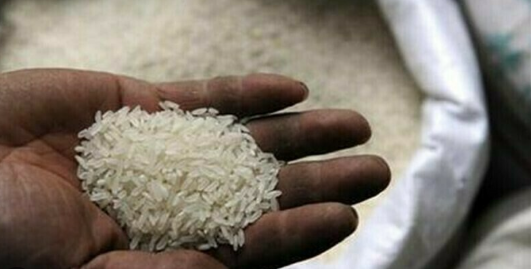
India’s rice production has reached an all-time high this crop year, prompting exporters to seek growth in untapped markets like Iraq, Indonesia, and Saudi Arabia, industry officials say. Reuters Production for the year ending June 2025 stood at approximately 146.1 million tons, significantly exceeding domestic demand of about 120.7 million tons, according to data from the Food and Agriculture Organization (FAO) and exporter associations. Reuters With stocks mounting in government warehouses, companies under the Indian Rice Exporters Federation (IREF) banner say they are actively targeting new buyers among emerging markets to offset the domestic glut. Vice-President Dev Garg said Indian exporters plan to tap 26 international markets, leveraging India’s wide range of rice varieties. Reuters “This surge gives us the opportunity to diversify beyond traditional markets,” Garg said in a statement. “We are already supplying around 40 percent of the world’s rice shipments, and now we want to deepen our presence in markets that are less served.” Reuters Analysts say the shift comes at a crucial time for India’s agriculture sector. Surplus rice stocks, combined with favorable monsoon seasons, have improved output—and now exporters are working to turn volume into value by entering new geographies and offering specialized varieties. Why it matters:

India proposes raising foreign stake in state-run banks to 49%
Business

India proposes raising foreign stake in state-run banks to 49%

India’s government is preparing to increase the cap on foreign investment in state-run banks to 49 percent, a significant jump from the current 20 percent limit, according to sources close to the discussions. Reuters Officials from the Ministry of Finance and the Reserve Bank of India (RBI) are actively reviewing the proposal, which aims to strengthen capital infusions into the state-banking sector, which still holds over half of India’s banking assets but is generally seen as financially weaker than its private sector peers. Reuters Under the plan, the government would retain at least 51 percent ownership of these banks, and foreign shareholders would face limits on voting rights (for example, a maximum of 10 percent per investor) to maintain oversight and control. Reuters The move comes amid rising global investor interest in India’s banking industry. In recent months, foreign firms have acquired large stakes in private Indian banks, underscoring the potential for increased overseas capital in the sector. Reuters Market reaction was immediate: The index tracking state-run banks in India jumped to a record high. Analysts say the announcement signals a possible structural shift in how India’s public sector banks are perceived by investors. Reuters Why this matters:Allowing higher foreign ownership in state banks could bring fresh capital, improved governance practices and stronger competition for India’s public banks. It may help them better serve India’s growing credit needs and modernise more rapidly. At the same time, retaining majority government control means the political and policy objectives typical of state banks will likely continue. Key takeaway:If adopted, the proposal would mark one of the most significant regulatory changes in India’s banking sector in years representing a major opening for foreign capital in what has been a largely protected domain. If you like, I can prepare two more articles in this same style today (e.g., one on technology in India and one on Indian-international trade), fully ready for you to publish. Would you like that?

India and China resume direct commercial flights after five-year pause
Business

India and China resume direct commercial flights after five-year pause

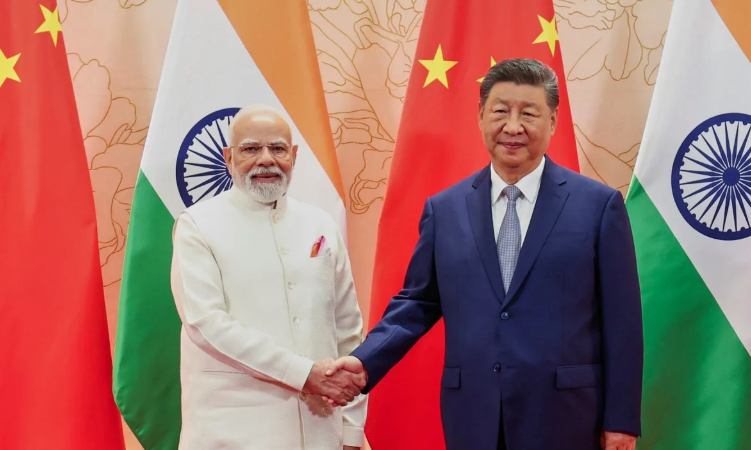
India and China are restarting direct commercial air services between the two countries after a hiatus of more than five years, signaling an easing of diplomatic tensions following repeated border clashes. Al Jazeera The first flights under the resumed arrangement are expected to launch later this year, with carriers from both countries preparing logistical and regulatory approvals. Officials from India’s civil aviation ministry and China’s transport regulator say the decision reflects improved bilateral relations and growing demand for travel and trade. Observers say the restoration of direct flights is significant for several reasons. It opens up faster, more efficient links for business travellers and tourists, reduces transit times and increases connectivity in South Asia’s most populous national economies. Moreover, the move is seen as a confidence-building step amid broader dialogue on trade, security and regional cooperation. However, analysts caution that full resumption will face operational hurdles, including airspace rights, slot allocations at busy airports, regulatory alignment, and passenger visa protocols. Both countries must now navigate these details even as public expectations rise for smoother cross-border travel. In the immediate term, airlines are expected to announce specific flight routes, frequencies, and pricing over the next few weeks. Passengers, especially those travelling for business or educational purposes, are expected to benefit from improved accessibility and connectivity between two of the world’s fastest-growing markets.

India projected to become world’s third-largest economy within two years, says Commerce Minister
Finance

India projected to become world’s third-largest economy within two years, says Commerce Minister

India is on track to overtake Germany and claim the title of the world’s third-largest economy within the next two years, according to Commerce and Industry Minister Piyush Goyal. He made the announcement during the Deep Tech Summit in Delhi on Wednesday, describing it as part of the country’s journey to a $5 trillion economy. ETTelecom.com At present, Germany holds the position as the third-largest economy with a GDP of around $5.01 trillion. Goyal said that India’s digital connectivity, infrastructure development and ease-of-doing-business measures have pushed it closer to this milestone. ETTelecom.com He pointed out that initiatives such as the “Digital India” programme, Aadhaar-based direct benefit transfers and financial inclusion schemes have widened access to digital infrastructure and strengthened India’s economy. These provide the foundation for India’s leap into a higher economic ranking. ETTelecom.com Goyal added that the government has committed a corpus of ₹1 lakh crore (approx. US$12 billion) to promote deep-tech innovation, underscoring how India intends to combine its booming tech ecosystem with macroeconomic ambitions. ETTelecom.com Why this matters Becoming the third-largest economy is not just symbolic. It signals that India is shifting from a rapidly growing large economy to one of the major global players. This could attract more international investment, strengthen its geopolitical position and create new economic opportunities domestically. Risks to watch Despite the optimism, there are headwinds. Global trade tensions, especially rising tariffs and protectionist policies, could slow export growth. India will need to keep its infrastructure, regulatory reforms and investment climate strong to sustain its climb. Goyal’s remarks underscore ambition—but execution will determine whether the target is met.

ISRO to Launch 6.5-Tonne Commercial Satellite Soon
Technology

ISRO to Launch 6.5-Tonne Commercial Satellite Soon

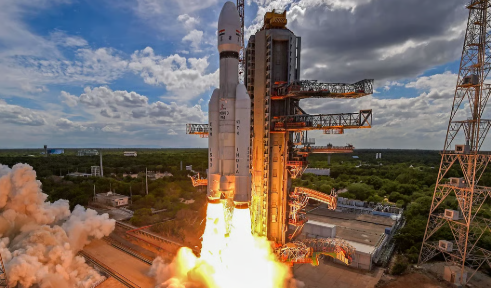
The Indian Space Research Organisation (ISRO) is preparing to launch one of the heaviest commercial satellites India has handled. The BlueBird‑6, weighing approximately 6.5 tonnes, arrived in India from the United States on 19 October. The New Indian Express The satellite will be launched on ISRO’s most powerful rocket from the Satish Dhawan Space Centre, though the exact date is yet to be finalized. Experts say this mission marks a major milestone for ISRO’s commercial arm, NewSpace India Limited (NSIL), which is increasingly generating revenue through international launch contracts. The New Indian Express BlueBird-6 is being flown to India aboard the Antonov cargo aircraft, the world’s largest, and was transported from Chennai over the road to the spaceport. The client is AST SpaceMobile, a Texas-based telecom company. The mission is scheduled for launch between November 2025 and the first quarter of 2026. In the coming months, AST SpaceMobile plans a series of satellites (BlueBird-7 to BlueBird-16) to roll out every one to two months. Each such satellite is expected to deliver up to 10,000 MHz of bandwidth for regions with weak terrestrial connectivity. The New Indian Express This development underscores India’s growing role in the global commercial space sector. With this launch, ISRO is not just placing national satellites but also handling large-scale international payloads, a capability that enhances India’s competitiveness and opens up new revenue streams for its space industry.

Modi meets with Trump.
Politics

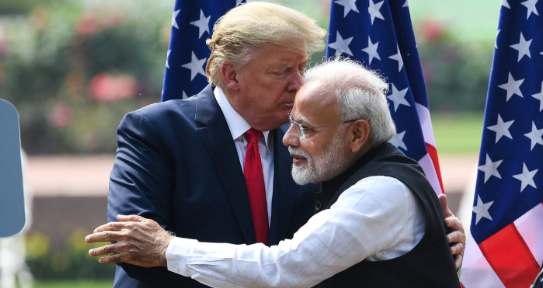
Modi Meets Trump

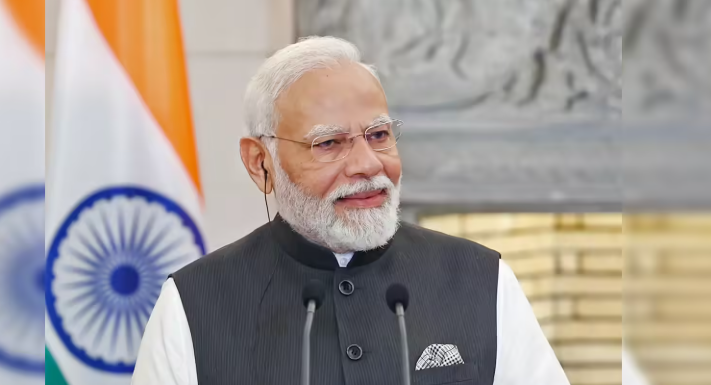
Modi to Join ASEAN Summit Online, Skips Meeting with Trump India’s prime minister, Narendra Modi, will participate in the upcoming ASEAN leaders’ summit remotely rather than travelling to Kuala Lumpur, officials said on Thursday, a move that all but rules out a planned in-person meeting with former U.S. president Donald Trump. Reuters Malaysian and Indian officials confirmed Modi informed Malaysia’s prime minister, Anwar Ibrahim, of his decision in a phone call. Malaysian statements said Modi cited the timing of Deepavali celebrations in India as a reason for joining the summit virtually. The 47th ASEAN Summit is scheduled to run from October 26 to 28 and will bring together leaders from the bloc’s 10 member states along with partner countries. mint+1 Diplomats and analysts say Modi’s choice underscores the delicate state of negotiations between New Delhi and Washington. Talks on a trade package have been complicated by disagreements over India’s purchases of Russian crude and recent U.S. tariff actions that have increased costs for some Indian exports. Those differences made a high-profile bilateral meeting less likely even before Modi’s announcement. Reuters New Delhi will still be represented in Kuala Lumpur at ministerial and deputy-level meetings, and India’s participation in summit sessions will remain substantive despite Modi’s physical absence. Officials stress that virtual attendance will not diminish the country’s strategic engagement with Southeast Asia under its Act East policy. mint Reactions at home were quick: opposition parties seized on the development to question diplomatic priorities, while government sources framed Modi’s remote participation as a practical choice that balances domestic commitments and international engagement. Observers note that virtual attendance has become an accepted diplomatic tool when schedules or national events constrain leaders’ travel.

Scroll to Top